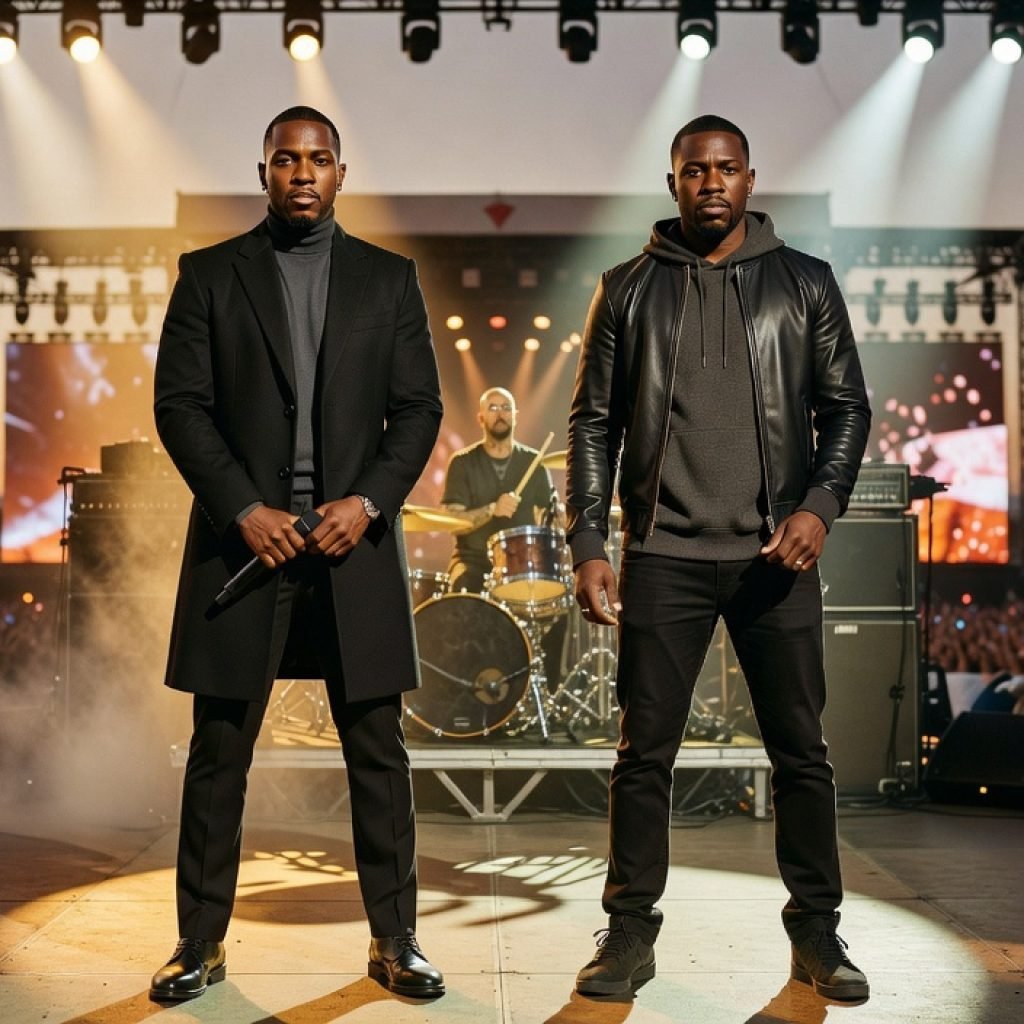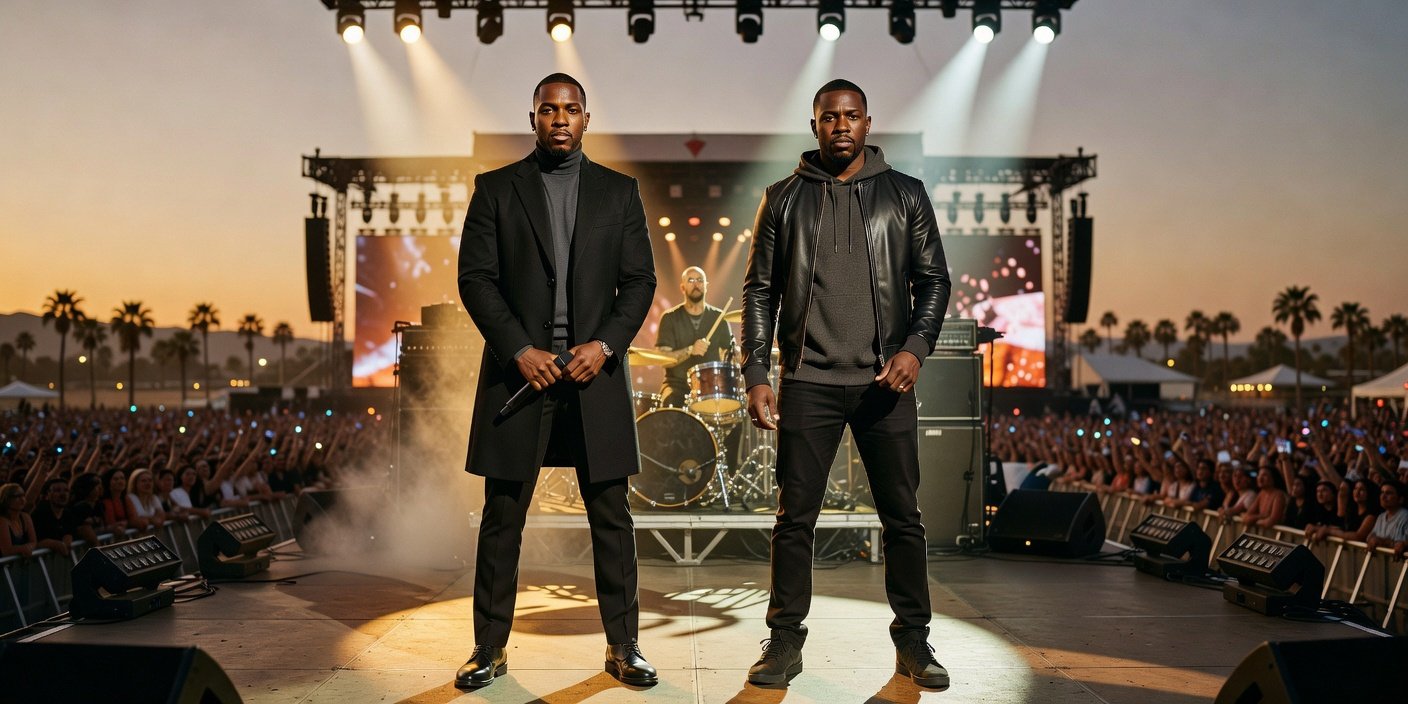
The sun-drenched desert floor of the Empire Polo Club bore witness to a masterclass in hip-hop storytelling this weekend, as Clipse—the legendary Virginia Beach duo of Pusha T and Malice—reclaimed their throne at Coachella 2026. Performing a career-spanning set that expertly bridged the gap between their gritty, cocaine-fueled roots and the mature, introspective soul of their Grammy-nominated comeback album, Let God Sort Em Out, the brothers commanded the stage with an ease that betrayed no sign of their fifteen-year studio hiatus. The energy reached a fever pitch when Blink-182 drummer Travis Barker emerged to lend his percussive ferocity to the set, turning the Outdoor Theatre into a crucible of raw, live instrumentation that served as a testament to the enduring, albeit evolved, power of the Clipse brand.
Key Highlights
- The Surprise Synergy: Travis Barker joined Pusha T and Malice for high-octane renditions of “Chains & Whips” and “P.O.V.,” injecting a punk-rock intensity into the duo’s signature minimalist Neptunes-style beats.
A Mature Return: The set list balanced vintage fan favorites against the vulnerable, deeply personal tracks from Let God Sort Em Out*, highlighting a significant artistic evolution in the duo’s narrative.
- The ‘Birds Don’t Sing’ Moment: The performance culminated in an emotional live rendition of “The Birds Don’t Sing,” a track dedicated to Malice’s late parents, marking the most poignant moment of the festival’s first weekend.
- Cultural Longevity: The performance served as a definitive “arrival” moment for their reunion era, proving that the Thornton brothers possess a timeless chemistry that remains relevant in the modern streaming landscape.
The Anatomy of a Resurrection
For many in the audience, the 2026 Coachella set felt less like a typical festival slot and more like a coronation of a legacy reclaimed. When Clipse stepped back into the public consciousness, many industry pundits questioned whether the chemistry between Pusha T and Malice could withstand the pressures of modern rap trends. Yet, the Coachella performance systematically dismantled those doubts, replacing them with a stark, undeniable reality: Clipse never actually left; they were simply waiting for the right moment to re-contextualize their story.
The Neptunes Heritage Meets Modern Percussion
The duo’s reliance on their iconic minimalist production—often synonymous with The Neptunes—has long been the backbone of their sound. However, the decision to incorporate live instrumentation, specifically the relentless, driving snare and tom-heavy style of Travis Barker, was a stroke of genius. Barker did not merely play along; he amplified the underlying tension inherent in Pusha T’s verses. During the performance of “Chains & Whips,” the interplay between the recorded, icy, sparse beat and the organic, sweat-soaked drumming from Barker created a dynamic texture that standard backing tracks simply cannot replicate. It turned a hip-hop performance into a rock-and-roll event, effectively bridging the gap between Coachella’s diverse audience demographics.
Vulnerability as the New Edge
Perhaps the most striking evolution observed during the set was the thematic shift in Malice’s delivery. In the early 2000s, the duo was the definitive voice of the street-hustle aesthetic—a narrative of illicit gains and the moral cost of success. Today, that narrative has shifted toward a more profound exploration of faith, loss, and the complexity of family dynamics. When the duo transitioned into “The Birds Don’t Sing,” the atmosphere shifted instantly. The crowd, previously energized by the aggressive tempo of the earlier tracks, fell into a respectful, almost reverent hush. This pivot showcases the duo’s maturity; they have recognized that their audience has aged with them, and they are no longer rapping just to assert dominance, but to share wisdom.
The Logistics of the Comeback
The operational success of this performance cannot be overstated. A reunion of this magnitude requires careful calibration of nostalgia and novelty. By curating a set list that honored the Lord Willin’ era while aggressively promoting Let God Sort Em Out, Clipse avoided the ‘legacy act’ trap. They positioned themselves as an active, vital force in 2026. The inclusion of Barker was not just a stunt; it was a calculated piece of sonic theater that signaled to the industry that Clipse is capable of adapting their sound to fit grand, live-performance settings without losing the intimacy that made them underground heroes in the first place.
FAQ: People Also Ask
Was the Clipse Coachella performance the only time Travis Barker has joined them?
No, while this was a major highlight of the 2026 festival, the collaboration highlights the duo’s broader strategy of utilizing live instrumentation to elevate their comeback tour, with Barker being a frequent, sought-after collaborator in the rock-meets-rap space.
What makes Let God Sort Em Out significant to this set?
Let God Sort Em Out is the duo’s first album in 15 years. Its critical success and Grammy nomination provided the necessary foundation for this comeback, shifting the focus from ‘reunion’ to ‘artistic renaissance.’
How does this set change the trajectory of Clipse’s 2026 tour?
Following the overwhelming reception at Coachella, the industry expects the duo to lean heavily into live-band arrangements for their upcoming European and North American dates, likely incorporating more guest musicians to maintain the high energy experienced in Indio.
Why was the performance described as ’emotional’?
Beyond the nostalgia of their reunion, the emotional weight stems from the lyrical content of their new material, which explicitly deals with the death of Malice’s parents and the personal toll of their past industry experiences.