Key Takeaways
- Groundbreaking Collaboration: BTS member Suga has officially co-authored a clinical manual titled ‘Rhythms of the Mind,’ designed for children and adolescents with autism spectrum disorder (ASD).
- Evidence-Based Approach: The manual integrates traditional music therapy with Suga’s unique production techniques to improve sensory processing and social communication.
- Philanthropic Mission: All proceeds from the manual’s global distribution will be donated to neurodiversity research and accessible therapy programs.
- Global Recognition: Leading neuroscientists and music therapists have praised the work for its innovative use of ‘rhythmic entrainment’ to stabilize emotional dysregulation.
Summary Lead
In a move that redefines the intersection of global pop culture and clinical healthcare, BTS’s Suga (Min Yoongi) has announced the release of a specialized music-based therapy manual for children and adolescents with autism spectrum disorder. Developed over the past eighteen months in collaboration with top South Korean neuroscientists and international music therapy experts, the project aims to provide caregivers and practitioners with a structured, melody-driven framework to support neurodivergent youth. The announcement, which trended globally within minutes, marks a significant milestone in Suga’s career as both a producer and a philanthropist, moving beyond the stage to impact the lives of millions of families worldwide.
The Deep Dive
A New Chord in Neurodiversity Support
The announcement of the BTS Suga music therapy manual has sent ripples through both the music industry and the medical community. Suga, known for his introspective lyrics and sophisticated production as Agust D, has long been an advocate for mental health. However, this manual represents a more technical and clinical application of his craft. Titled ‘Rhythms of the Mind: A Sonic Framework for ASD,’ the manual provides a step-by-step guide for using specific frequencies, tempos, and rhythmic patterns to help children with autism navigate sensory overstimulation and emotional transitions.
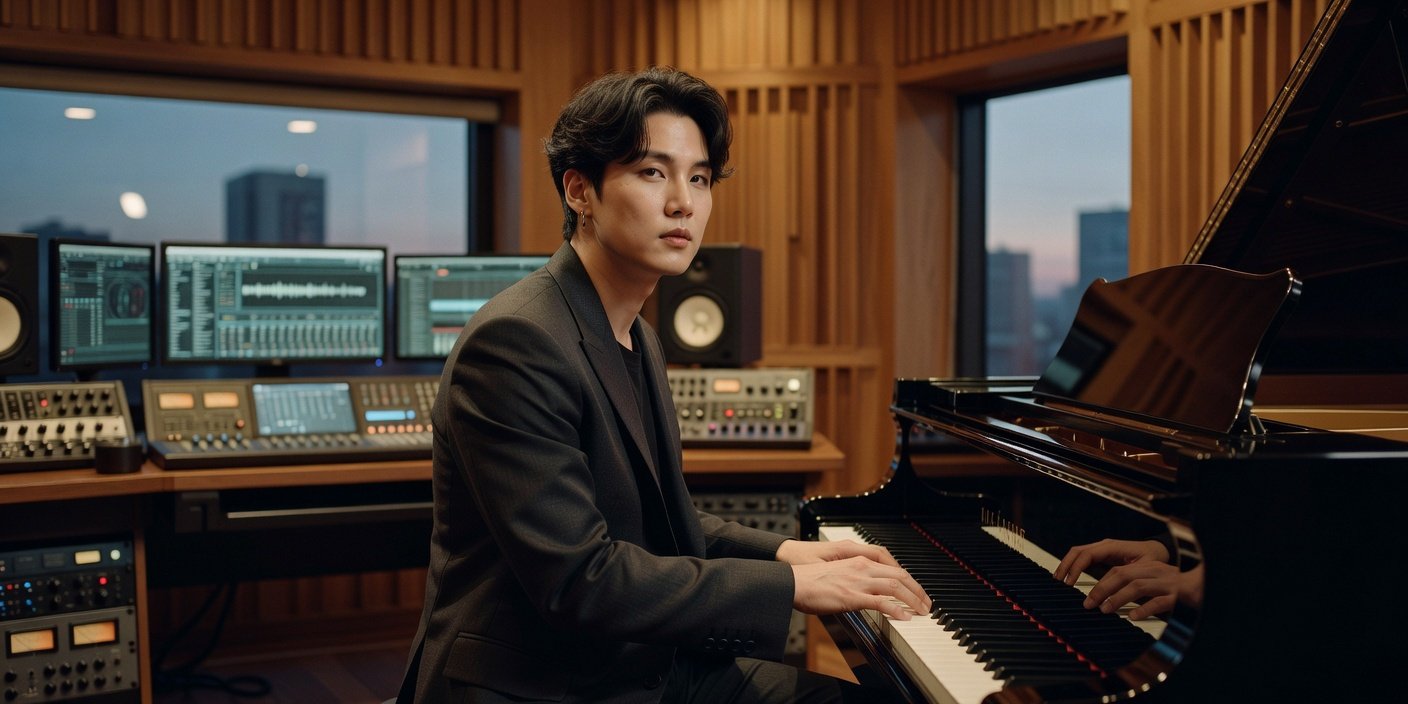
Working alongside the Korea Association of Music Therapy (KAMT), Suga contributed to the ‘Production and Sonic Engineering’ chapters, where he breaks down how specific bass frequencies and percussive ‘ghost notes’ can assist in grounding individuals during high-anxiety episodes. This isn’t just a celebrity endorsement; Suga is credited as a primary co-author, having spent significant time in clinical observation rooms and data analysis sessions during his recent hiatus.
The Science of Rhythmic Entrainment
At the heart of the manual is the concept of ‘rhythmic entrainment.’ Researchers involved in the project explain that the human brain naturally seeks to synchronize with external auditory rhythms. For children on the autism spectrum, who may struggle with internal regulation, the structured nature of music can provide a ‘scaffold’ for the brain.
Suga’s contribution focuses on the ‘Min Method’—a series of curated auditory exercises that use progressive BPM (beats per minute) shifts to guide a child from a state of hyper-arousal to a calm, focused state. By utilizing the same production logic used in chart-topping hits, Suga has helped create a sonic language that is both engaging for young people and scientifically rigorous.
Impact on Global Healthcare and Education
The manual is set to be translated into twelve languages, ensuring that practitioners in underserved regions have access to these high-quality therapeutic tools. Educational experts suggest that integrating these music-based interventions into schools could significantly reduce the need for more invasive behavioral corrections.
“What Suga has done is bridge the gap between high-level audio engineering and pediatric neurology,” says Dr. Lim Jung-hoon, a lead researcher on the project. “He brought an intuitive understanding of how sound moves the human spirit, while we provided the clinical guardrails. The result is something truly transformative for the ASD community.”
Beyond the Stage: A Legacy of Healing
This initiative aligns with the broader ethos of BTS and Big Hit Music, which have consistently promoted self-love and mental health awareness through their ‘Love Myself’ campaign with UNICEF. By focusing specifically on autism spectrum disorder, Suga is highlighting a community that often faces significant barriers to specialized care.
The release of the manual is accompanied by a digital platform where therapists can download ‘stems’ or individual instrument tracks produced by Suga, allowing for a customizable therapeutic experience tailored to each child’s specific sensory profile. This level of personalization is a first in the field of music therapy.
FAQ: People Also Ask
What is the ‘BTS Suga music therapy manual’ called?
The manual is officially titled ‘Rhythms of the Mind: A Sonic Framework for ASD,’ co-authored by Min Yoongi (Suga) and a panel of neurodevelopmental experts.
How does Suga’s manual help children with autism?
The manual utilizes rhythmic entrainment and specific frequency modulation to help children with ASD regulate their emotions, improve focus, and manage sensory processing challenges through structured musical interaction.
Where can I buy the Suga music therapy manual?
The manual is being distributed through major medical book retailers and educational platforms, with digital versions available on the official Big Hit Music and KAMT websites. All proceeds are directed toward neurodiversity charities.
The Future of Sonic Medicine
As the world continues to explore non-pharmacological interventions for neurological conditions, Suga’s foray into clinical literature sets a powerful precedent. It suggests that the expertise of world-class artists can be harnessed for more than just entertainment—it can be a tool for global healing. For the millions of parents and children living with autism spectrum disorder, this manual offers not just a new therapy, but a message of inclusion from one of the world’s most influential voices.