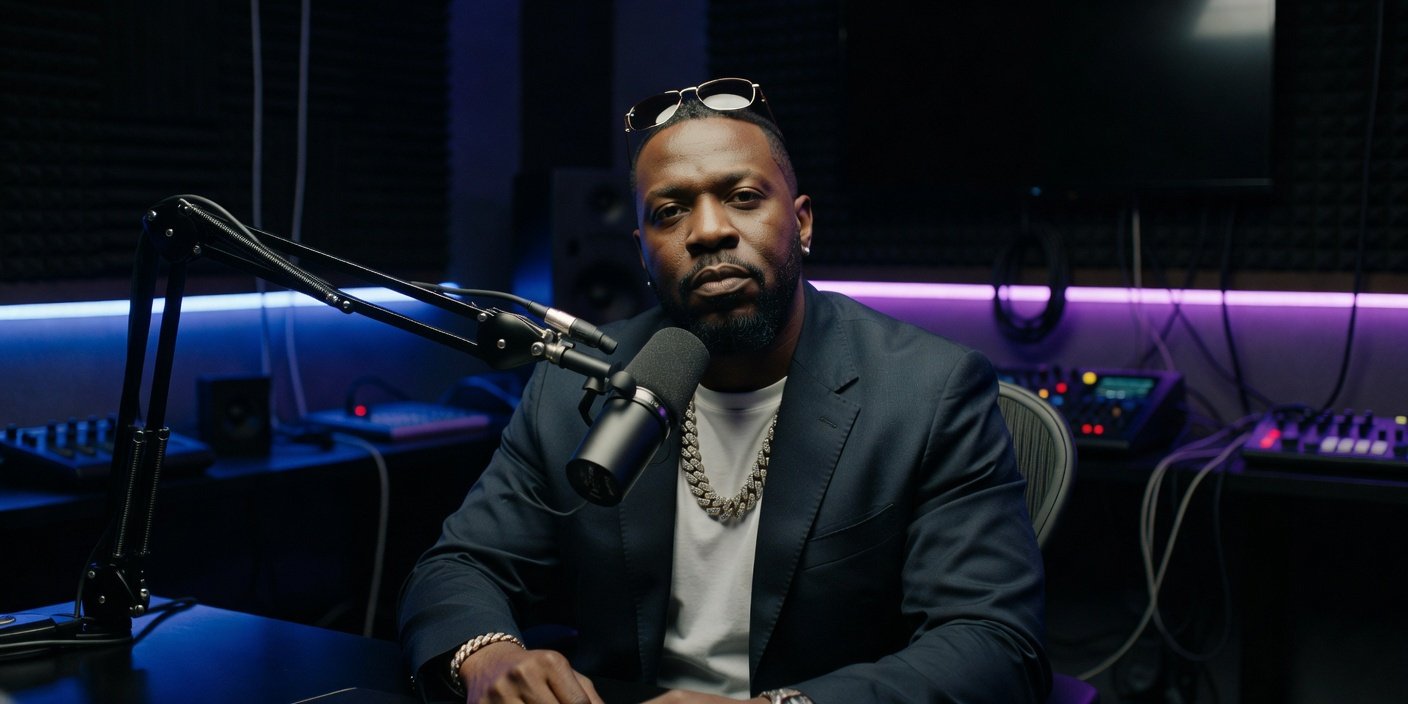
In a decisive moment for hip-hop media, Harlem icon and media personality Cam’ron has publicly declared that an interview with Ye, formerly known as Kanye West, is off the table. The announcement, delivered during a recent episode of his popular podcast, ‘Talk With Flee,’ highlights a growing rift in the rap industry, fueled by disagreements over artistic choices, personal conduct, and the boundaries of public discourse. Cam’ron’s firm stance arrives on the heels of Ye’s persistent controversy surrounding his track “Cousins,” which has drawn widespread criticism for its explicit lyrical content and the nature of the personal revelations shared within the verses. As the two industry titans lock horns over what constitutes public ‘bullying’ versus legitimate media scrutiny, the fallout signals a broader tension in how artists are held accountable in the modern era.
Key Highlights
- Interview Refusal: Cam’ron stated he has no intention of hosting Ye on ‘Talk With Flee,’ citing the rapper’s controversial song “Cousins” as the primary barrier.
- The Lyrical Controversy: The song in question, “Cousins,” contains graphic, deeply personal anecdotes that Cam’ron has publicly condemned, questioning the authenticity and convenience of Ye’s timing regarding the revelations.
- The Bullying Allegation: Cam’ron revealed that Ye reached out to him following the criticism, accusing the Harlem rapper of “bullying,” a charge Cam’ron vehemently rejects.
- Media Accountability: The dispute highlights the evolving responsibility of artist-led media platforms in deciding which narratives to platform versus which ones to challenge.
The Anatomy of a Public Snub
The friction between Cam’ron and Ye is not merely about a declined interview; it represents a clash between two eras of hip-hop and two distinct philosophies on public persona. When Cam’ron explicitly stated that a sit-down with Ye is “probably not” in the cards, he wasn’t just expressing a personal preference—he was drawing a line in the sand regarding the content he is willing to platform. The ‘Cousins’ controversy has become a lightning rod for debate, with the song featuring lyrics in which Ye recounts childhood experiences that many listeners found profoundly uncomfortable and, for some, indicative of a larger disregard for personal boundaries.
The ‘Cousins’ Context
To understand Cam’ron’s position, one must look at the source material. Ye’s track, which surfaced in the wake of his highly publicized and often erratic social media presence, includes lyrics detailing intimate, childhood sexual encounters. Cam’ron, known for his straight-shooting, unfiltered, and often humorous commentary on his podcast, approached the subject not with a clinical detachment, but with the perspective of someone who values traditional codes of conduct. He criticized the specific nature of the revelations, arguing that bringing such private, arguably taboo subject matter into the public sphere for the sake of music or viral engagement is a bridge too far.
“I don’t really care about what people do in their off-time, but when you wanna just openly admit at 40-something that you’ve been sucking dk when you was a teenager, I can’t really rock with you,” Cam’ron noted. This sentiment encapsulates his broader argument: that the performance of identity, specifically when it involves shocking or unconventional confessions, should not be weaponized or used as a shield against criticism. For Cam’ron, the controversy isn’t about sexual orientation—a point he clarified by stating he has no issue with the LGBTQ+ community—but rather about the perceived manipulation of narrative.
The Clash of Personalities and Podcasting
Podcasting has revolutionized the way hip-hop artists share their stories. Where traditional media outlets often rely on press releases and managed PR campaigns, platforms like ‘Talk With Flee’ offer an unvarnished look at the artist’s mindset. However, this shift comes with consequences. When Cam’ron criticizes an artist, it carries weight because the medium is built on peer-to-peer relationships, not corporate media structure.
When Ye reportedly reached out to Cam’ron to label his critiques as “bullying,” it underscored the fragile dynamic between the two artists. For Ye, a figure who has frequently faced public scrutiny and often frames himself as a martyr of sorts, Cam’ron’s bluntness was interpreted as a personal attack. Conversely, for Cam’ron, his comments were a reaction to Ye’s public output. This dynamic—the ‘accused’ turning the tables on the ‘critic’—is a common trope in modern social media feuds, but it gains a different dimension when it plays out between two of the most influential figures in the genre’s history.
The Broader Implications for Hip-Hop Media
This incident forces a critical question: What are the responsibilities of a rapper-turned-host? Cam’ron has successfully transitioned from an iconic lyricist to a legitimate media powerhouse. His show, ‘Talk With Flee,’ has become a cultural touchstone. Because of this success, his refusal to interview Ye isn’t just a personal choice; it’s an editorial one. It suggests that as these platforms grow, the creators behind them are becoming the new gatekeepers of hip-hop discourse. They aren’t just reading news; they are shaping the narrative, choosing which controversies to amplify and which to dismiss.
Furthermore, the reaction to this situation suggests that the audience is becoming increasingly weary of the ‘shock-jock’ antics that have defined Ye’s recent career. While Ye may have garnered significant media attention for his erratic behavior, there is a limit to how much that attention can convert into industry support. Cam’ron’s decision to distance himself from the narrative may be a bellwether for other industry figures who are tired of being associated with the chaotic, often toxic, cycles that surround Ye’s output.
The Question of ‘Convenience’
Perhaps the most poignant part of Cam’ron’s critique is his suggestion that Ye’s confessions are made “when it’s convenient.” This speaks to a cynical view of contemporary fame, where trauma, sexuality, and personal history are commodified. It suggests that Ye uses these revelations to stir the pot, generate headlines, and pivot the conversation away from his professional failures or controversies. Whether or not this is true, the fact that it is being articulated by a peer like Cam’ron—someone with deep, historical credibility in the culture—carries a weight that typical entertainment journalism cannot replicate.
As the industry watches this dynamic unfold, the focus shifts to what comes next. Will other artists follow suit and demand a higher standard of decorum before agreeing to engage with Ye? Or will this remain an isolated incident between two conflicting personalities? Regardless, the ‘Cousins’ incident stands as a defining moment in the current era of hip-hop, illustrating that even in a digital landscape that rewards noise, some artists are choosing to prioritize integrity over engagement.
FAQ: People Also Ask
1. Why does Cam’ron refuse to interview Ye?
Cam’ron has stated he is uncomfortable with the content of Ye’s song “Cousins,” which features explicit and personal lyrics regarding childhood experiences. He views the song’s subject matter and Ye’s public presentation of it as disingenuous.
2. Did Ye respond to Cam’ron’s criticism?
Yes, according to Cam’ron, Ye contacted him directly following the podcast episode, accusing him of being a “bully” for airing these criticisms publicly.
3. Is this feud affecting other aspects of hip-hop media?
It highlights an ongoing debate regarding the role of artist-led podcasts in shaping industry narratives. As these platforms grow in influence, hosts like Cam’ron are increasingly acting as gatekeepers, deciding which artists and behaviors are worthy of high-profile, professional discourse.
4. What is the significance of the song ‘Cousins’?
‘Cousins’ is a controversial track by Ye that includes lyrics recounting intimate sexual acts from his childhood. The song has sparked widespread public debate and is considered a polarizing point in his recent discography, with many listeners questioning the necessity and intent behind the lyrical content.