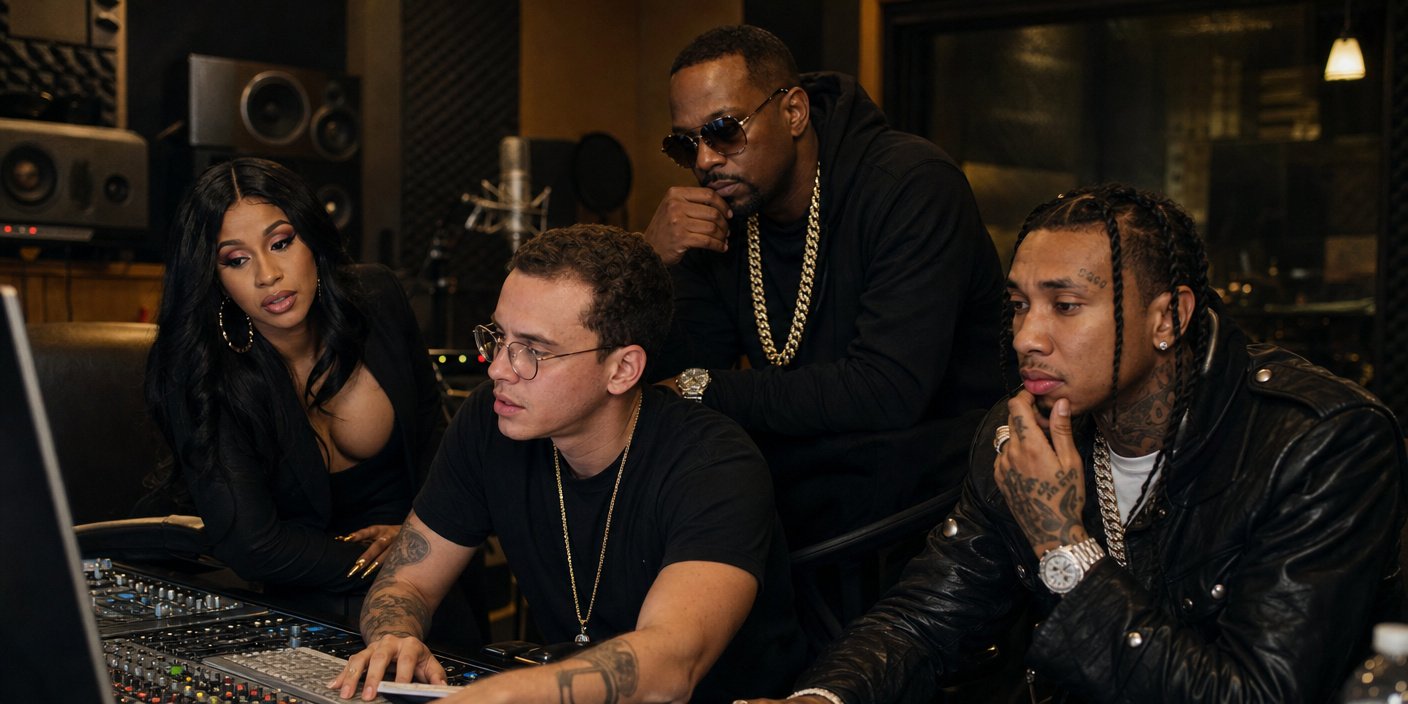
The music industry’s summer landscape hits a fever pitch this evening, July 31, 2026, as a heavy-hitting quartet of hip-hop icons—Cardi B, Logic, Juicy J, and Tyga—simultaneously deploy new projects to streaming platforms. This alignment of diverse regional styles and commercial powerhouses marks what analysts are calling the most significant release day of the mid-summer quarter, forcing a massive recalibration of current Billboard 200 projections and streaming algorithmic priority.
Key Highlights
- Major Star Power: Cardi B and Logic return with highly anticipated material, signaling potential shifts in the mainstream rap hierarchy for the second half of 2026.
- Regional Diversity: The inclusion of Memphis legend Juicy J and West Coast staple Tyga provides a multi-generational, coast-to-coast sonic experience for listeners.
- Strategic Release Timing: By occupying the July 31 window, these artists are positioning themselves for maximum visibility ahead of the end-of-year award consideration periods, such as the Grammys.
- Streaming Saturation: Market analysts are closely monitoring how these concurrent releases will divide user engagement across top-tier platforms like Spotify and Apple Music.
The Mid-Summer Sonic Shift: Analyzing the July 31 Landscape
The convergence of release dates for artists as distinct as Cardi B and Logic creates a unique tension in the marketplace. While Cardi B has spent the last year refining her follow-up to her industry-defining catalog, her return represents more than just a musical drop; it is a cultural event that typically shifts the focus of the Recording Industry Association of America (RIAA) certification trackers for the subsequent quarter. Conversely, Logic’s steady output and dedicated fanbase allow for a different type of dominance—one driven by long-tail streaming consumption rather than solely explosive first-week numbers.
The Headliners: Cardi B and Logic’s Strategic Evolution
Cardi B’s presence on the July 31 slate is perhaps the most influential factor. Since her meteoric rise, her releases have served as barometers for the health of commercial hip-hop. For this 2026 drop, insiders suggest a focus on high-fidelity production, moving away from pure commercial trap into more experimental, genre-bending compositions. This aligns with a broader industry trend where established female superstars are leveraging their platform to push the boundaries of what constitutes a ‘hit’ in the digital age.
Logic, meanwhile, remains one of the most consistent performers in the streaming era. His approach to the July 31 release date appears calculated to leverage his ‘everyman’ appeal, contrasting sharply with the maximalist aesthetic often associated with the modern Billboard 200 chart-toppers. Logic’s ability to maintain high engagement numbers without traditional radio dependency makes his contribution to today’s drop particularly interesting for data analysts studying consumer behavior.
Regional Soundscapes: The Legacy of Juicy J and Tyga
While the national conversation often fixates on New York or Atlanta, the influence of Memphis and the West Coast remains foundational to the genre’s longevity. Juicy J, a titan whose influence spans three decades, continues to define the trap sound that dominates the current production landscape. His inclusion in this drop highlights the enduring relevance of ‘Three 6 Mafia’ era production styles, which remain a primary influence on the soundscapes of 2026.
Tyga, representing the West Coast aesthetic, offers a distinct counterpoint. His track record for producing club-ready, high-energy anthems provides the perfect balance to the more introspective or experimental tracks likely to be found on the Cardi B and Logic projects. This interplay of styles—Memphis bounce versus West Coast groove—ensures that the July 31 release cycle caters to a wide spectrum of the listening audience, effectively monopolizing the weekend hip-hop conversation.
Economic Impact: The Streaming Wars of 2026
Beyond the art, these releases are massive economic drivers for platforms like Spotify and Apple Music. The music industry has moved toward an ‘Algorithm-First’ model, where the success of a release is measured less by physical sales and more by ‘playlist placement’ and ‘skip-rate analysis.’ By coordinating a drop date that features multiple superstars, labels are forcing platforms to update their ‘New Music Friday’ algorithms. This creates a bottleneck effect where listeners are inundated with high-value content, essentially turning July 31 into a ‘Super Bowl’ for hip-hop streaming revenue.
Historical Context: The Evolution of Release Cycles
Looking back at the mid-2000s, album drops were dictated by physical distribution chains and terrestrial radio support. In 2026, the strategy is entirely different. Artists like Cardi B and Tyga are now operating within a ecosystem that rewards instant accessibility and social media virality. The shift from physical to digital has allowed for the ‘surprise drop’ or the ‘coordinated event’ to become the industry standard. Today’s release is a testament to the maturation of the digital music economy, where the release date itself acts as a marketing campaign.
Future Predictions: Chart Performance and Award Season
As we look toward the final months of 2026, the performance of these albums will likely dictate the conversation surrounding the Grammy Awards and the end-of-year Billboard charts. If Cardi B and Logic manage to capture the attention of the critical establishment, they will essentially cement their roles as the dominant forces in the genre for the next two years. Conversely, Juicy J’s performance will serve as a bellwether for how veteran artists can continue to monetize their catalog value in an industry that often favors newer, younger talent. The data captured from this specific release window will provide labels with the roadmap for their 2027 rollout strategies, making today’s numbers arguably the most important of the summer.
FAQ: People Also Ask
Q: How do these multiple artist releases affect Billboard chart rankings?
A: While multiple superstars dropping on the same day can create a ‘logjam,’ it also increases overall streaming traffic. Often, the combined hype helps to pull in casual listeners who might not have checked in otherwise, potentially benefiting all artists involved by increasing the total pool of active users.
Q: Is there a specific reason these artists dropped on July 31, 2026?
A: July 31 is strategically positioned at the end of the month, which is a prime window for industry quarterly reporting. It allows these artists to count a full week of streams for the final week of July, impacting both monthly and quarterly performance metrics.
Q: Are there any specific labels managing these releases?
A: The releases involve a mix of major labels, including the Atlantic Records stable for artists like Cardi B, and independent distribution channels that artists like Logic and Juicy J utilize to retain greater creative and financial control in 2026.
Q: How can listeners optimize their experience with these new drops?
A: Most major streaming platforms have created curated ‘New Hip-Hop’ playlists that aggregate these tracks. Listening to these official editorial playlists is the most effective way to experience the full breadth of today’s music while ensuring your streams contribute to the official chart data.