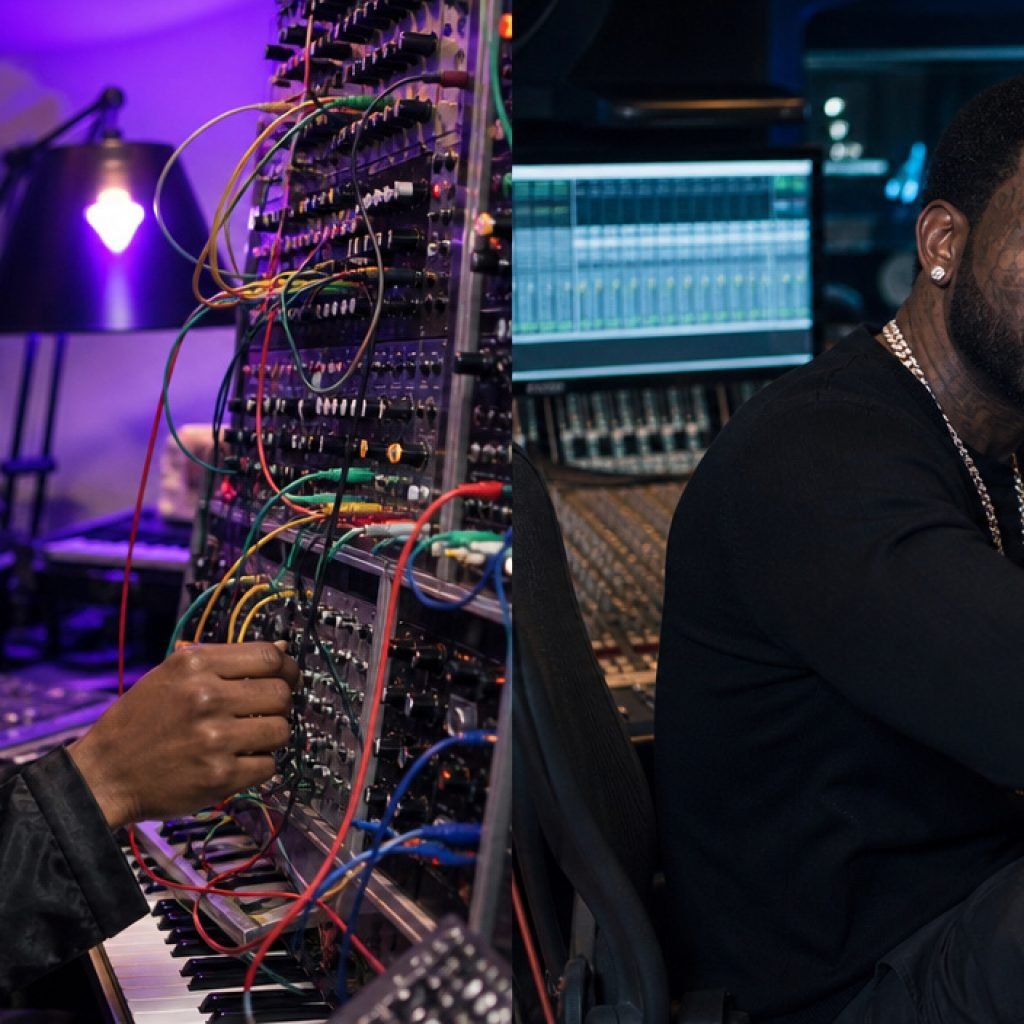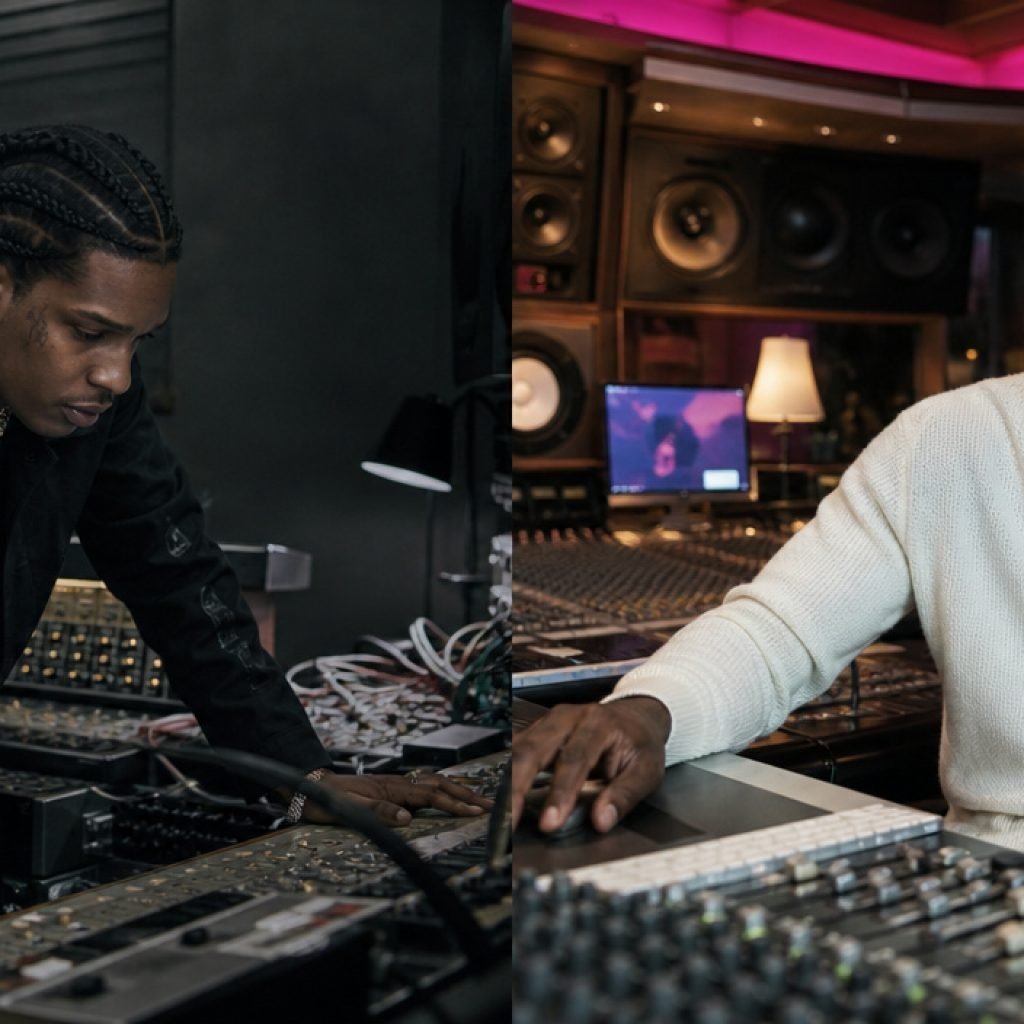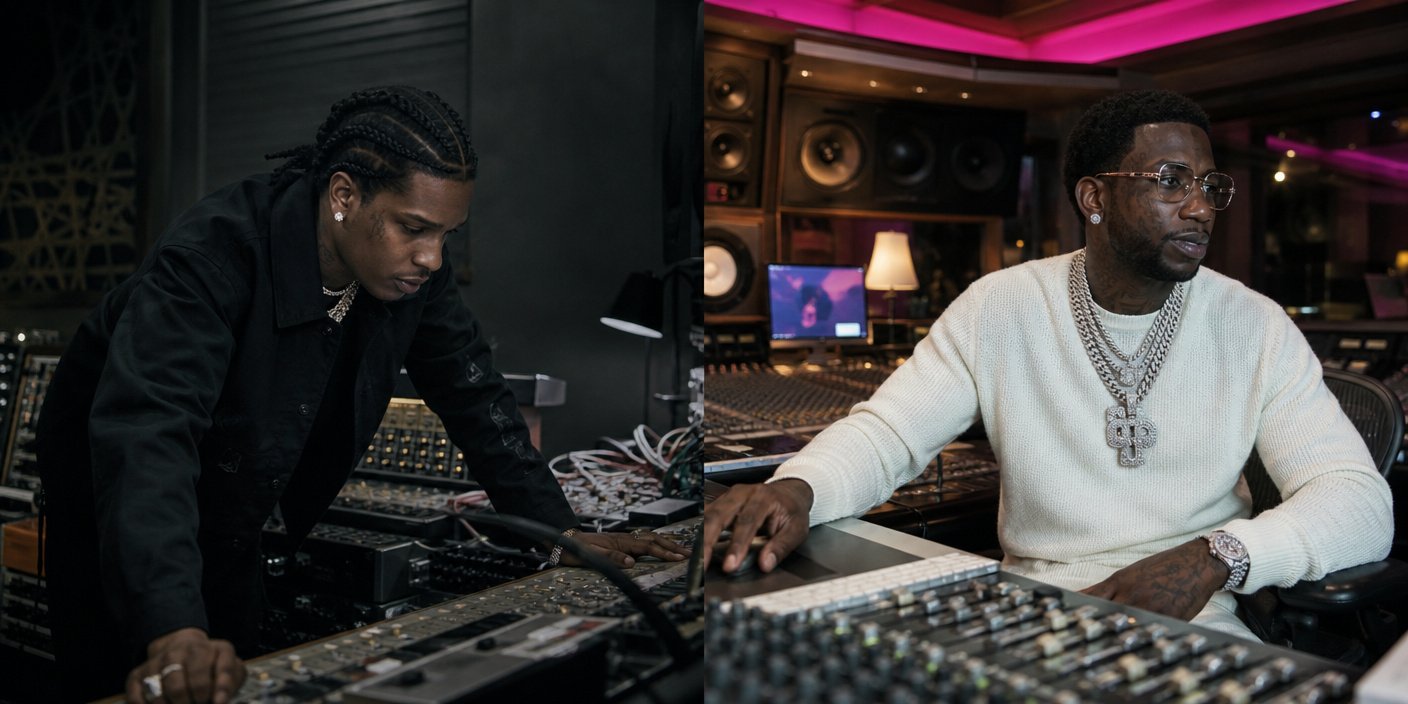
The music industry’s internal clock hit a deafening crescendo this morning, October 16, 2026, as two of hip-hop’s most distinct archetypes—A$AP Rocky and Gucci Mane—dropped major projects. This alignment of titans creates a rare, bifurcated market moment that challenges listeners to choose between the high-fidelity, auteur-driven soundscape of Rocky and the relentless, foundational trap energy of Gucci Mane. As streaming platforms struggle to accommodate the influx of high-velocity data, this Friday is shaping up to be the most significant release day of the Q4 cycle, fundamentally altering the trajectory of the Billboard 200 projections for the coming month.
Key Highlights
- A$AP Rocky’s Return: The Harlem native ends a period of creative incubation with a project focused on atmospheric sonic depth and avant-garde production techniques.
- Gucci Mane’s Prolific Pace: The Atlanta trap legend reinforces his status as the industry’s most consistent curator, dropping a project that leans heavily into his classic, bass-heavy signature.
- Q4 Market Dynamics: With the end of the year approaching, these releases serve as the final “pre-holiday” push for labels looking to maximize Q4 market share and streaming monetization.
The Battle for Friday: Analyzing the October 16 Power Shift
The dual-release phenomenon occurring today, October 16, 2026, is far from accidental. In the modern music economy, release scheduling is a game of high-stakes chess. By dropping on the third Friday of October, both A$AP Rocky and Gucci Mane are capitalizing on a specific “dead zone”—a window of time where the hype of late summer has dissipated, but the glut of holiday-season releases has not yet begun. This strategic positioning allows both artists to secure prime real estate on curated playlists and algorithmic discovery tools, effectively capturing the attention of the core 18-34 demographic that drives streaming metrics.
The A$AP Rocky Paradigm: Auteurism in the Digital Age
For A$AP Rocky, this release is not merely about volume; it is about narrative. Since his last major studio outing, the culture has shifted toward hyper-fast, content-driven music consumption. Rocky, however, remains one of the few artists who can force the audience to slow down. The production quality on this latest project suggests a departure from commercial radio pandering in favor of textural, experimental hip-hop that prioritizes “album-as-art” cohesion. This approach is risky in an era of playlisting, but it builds long-term equity with both critics and the core fanbase. The entity at play here is “Rocky’s AESTHETIC,” a brand that has transcended music to influence fashion, digital art, and luxury marketing, creating a synergy that elevates his streaming numbers beyond mere audio consumption.
The Gucci Mane Model: The Trap Blueprint
In stark contrast to the experimental nature of Rocky’s drop, Gucci Mane’s release today reaffirms his role as the architect of modern Atlanta trap. If Rocky represents the “high-art” side of the spectrum, Gucci represents the “infrastructure” side. His ability to maintain quality control while moving at a breakneck speed is the benchmark for the trap subgenre. By releasing a project today, he creates a localized event, triggering “notification fatigue” among his massive, hyper-loyal audience. For the listener, the contrast between these two drops is stark: Rocky offers a cinematic experience, while Gucci provides a masterclass in rhythm, slang, and bass-heavy composition that serves as the backbone for the modern hip-hop ecosystem.
Secondary Angles: Beyond the Music
To understand the true weight of today’s drops, one must look at three underlying market forces:
1. The Streaming Economy and Data Velocity: Streaming platforms like Spotify and Apple Music are currently optimizing their backend algorithms to handle the specific “data surge” generated by these two massive fanbases. The competition is not just between the artists, but for the “Featured” slot on global playlists that guarantee millions of daily streams.
2. The Decline of Physical Media in Q4: Historically, Q4 was dominated by physical CD sales and holiday gifting. In 2026, the absence of physical retail footprint for these projects highlights a transition toward a purely digital “attention economy,” where the only metric that matters is the “skip rate” and “save rate” in the first 48 hours.
3. Cross-Pollination and Industry Alliances: The feature lists on these projects provide a roadmap of the current hip-hop power structure. By analyzing who appears on these tracks—whether rising stars or legacy peers—we see the changing of the guard and the shifting allegiances within the RIAA-certified hierarchy.
FAQ: People Also Ask
Q: How does this October 16 release impact chart projections?
A: Industry analysts anticipate that both artists will split the market, likely resulting in a tight race for the top three spots on the Billboard 200, as streaming numbers will be diluted by the shared attention of the hip-hop demographic.
Q: Why do major artists choose this specific mid-October date?
A: October 16, 2026, avoids the immediate competition of the high-saturation holiday season in November and December, allowing these albums to “settle” and accumulate streaming velocity before the year-end “Best Of” lists are finalized.
Q: What is the primary difference in sound between the two drops?
A: A$AP Rocky’s project leans into experimental production, high-fidelity sound design, and avant-garde lyrics, while Gucci Mane’s release adheres to the established, rhythmic, and heavy-bass trap formula that defined the Atlanta sound.
Q: Can I expect any surprise collaborative tracks between the two?
A: While rumors circulated in early Q3, there is no official confirmation of a collaborative track, suggesting both artists preferred to keep their projects narratively distinct to ensure clear brand identity upon release.