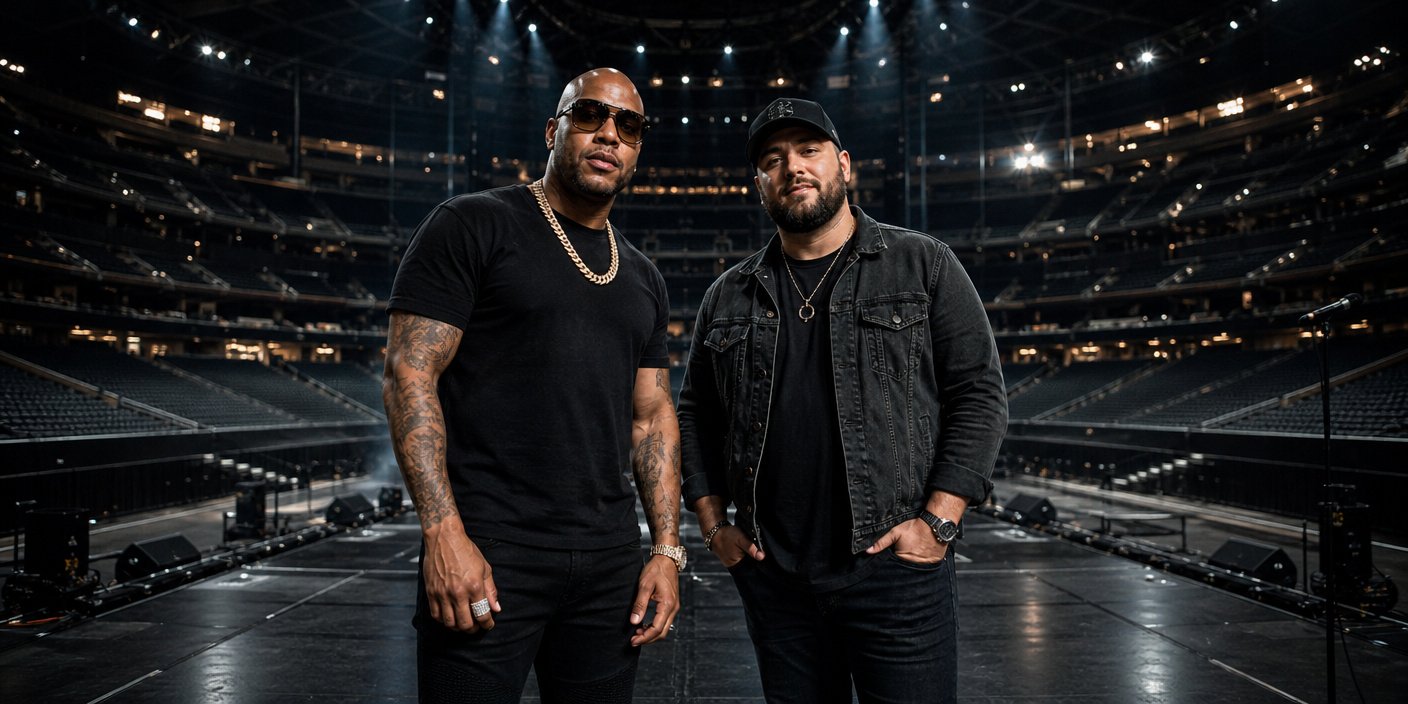
In a move that underscores the evolving landscape of live entertainment, hip-hop icon Flo Rida and country chart-topper Mitchell Tenpenny have officially announced their collaborative 2027 tour, titled “Whistle & Whiskey.” The trek, which is set to launch in February 2027, is designed as a direct collision of two distinct musical cultures, targeting both the high-energy rap audience and the modern country crossover demographic. By limiting the initial run to four major metropolitan markets, the tour organizers appear to be utilizing a “scarcity marketing” model to maximize ticket demand and venue prestige, moving away from the traditional, sprawling multi-city tour model that dominated the previous decade.
Key Highlights
- Tour Title: “Whistle & Whiskey” featuring Flo Rida and Mitchell Tenpenny.
- Launch Date: February 2027.
- Scope: Exclusive, high-density four-city trek designed to merge disparate fanbases.
- Strategic Goal: Leveraging genre-fluid streaming behaviors to capture new demographics.
The Strategic Convergence of ‘Whistle’ and ‘Whiskey’
The “Whistle & Whiskey” tour is far more than a simple co-headlining concert series; it represents a calculated play by both artists’ management teams to capitalize on the increasing genre-fluidity of 2027 listeners. According to data from major platforms like Spotify and Apple Music, listener habits have shifted dramatically over the past three years, with a statistically significant increase in cross-pollination between Hip-Hop and Country playlists.
Flo Rida, known for his global dominance in pop-rap, and Mitchell Tenpenny, a powerhouse in the modern country sphere, are effectively testing a new touring prototype. By branding the tour with a name that explicitly nods to both musical identities—the “Whistle” suggesting the urban, rhythmic beat-driven hits of the former, and “Whiskey” grounding the tour in the storytelling, twang-infused aesthetics of the latter—the artists are creating a clear identity for a brand that is expected to attract casual listeners alongside die-hard fans. This is a classic example of ecosystem expansion; it is no longer about dominating a single chart, but rather about dominating the listener’s overall library share.
The Economics of the Four-City Model
Why only four cities? The decision to restrict the tour to a limited, high-revenue trek in February 2027 is a significant departure from the standard industry practice of touring 30 to 50 cities. Industry analysts suggest this model lowers the overhead risk significantly while increasing the “event” status of the shows. By focusing on four key locations, the tour promoters can command premium ticket pricing, secure higher-tier venue sponsorships, and create a narrative of exclusivity that encourages travel from fans outside these major hubs. This approach is highly efficient for high-production live shows, as it allows for the stabilization of complex stage logistics, pyro-technics, and lighting rigs that are often difficult to scale down for smaller, secondary-market arenas.
Analyzing the Genre-Blending Trend
We are currently witnessing a peak in what music industry analysts refer to as the “Super-Genre” era. For years, the Country Music Association (CMA) and various Hip-Hop industry groups operated in distinct silos. However, the rise of viral short-form content has rendered these barriers obsolete. Mitchell Tenpenny’s ability to weave R&B-influenced vocal runs into traditional country structures makes him the perfect partner for Flo Rida, who has spent his career refining the art of the pop-crossover smash.
This partnership also speaks to the broader economic impact on venues. Stadiums and large-capacity arenas are increasingly seeking acts that can move tickets across different consumer segments. By uniting these specific fanbases, the “Whistle & Whiskey” tour ensures that venue owners can maximize high-margin concessions—with the “Whiskey” theme likely driving higher alcohol revenue, a vital metric for venue profitability in 2027.
Future Implications for Touring Artists
Looking forward, the success of this February run could set a new precedent for legacy artists. If Flo Rida and Tenpenny can prove that such a disparate combination can generate consistent sell-outs, we expect a wave of “mash-up” tours to hit the market in late 2027 and 2028. This model allows artists to cross-sell to one another’s audiences, effectively doubling their reach with half the travel time. For the artists, the reduction in tour burnout is substantial; for the fans, the result is a high-production, curated experience that stands apart from the repetitive, yearly touring cycle. As we monitor the February launch, the primary metric of success will not be the total number of tickets sold, but the demographic makeup of the attendees—a crucial data point for future tour booking and corporate sponsorship alignment.
FAQ: People Also Ask
Q: Will the ‘Whistle & Whiskey’ tour expand to more cities after February?
A: Currently, the organizers have announced a strict four-city schedule for February 2027. While promoters often extend tours based on high demand, there is no official confirmation of additional dates at this time.
Q: What is the primary musical goal of this collaboration?
A: The goal is to bridge the gap between Hip-Hop and Country fanbases, capitalizing on current streaming trends that show high overlap in listener habits between the two genres.
Q: Is this a co-headlining tour?
A: Yes, the billing of “Whistle & Whiskey” signifies a co-headlining status where both Flo Rida and Mitchell Tenpenny are expected to receive equal prominence in marketing and set-list length.
Q: How does this tour model differ from traditional artist touring?
A: Unlike traditional tours that hit 30+ cities to maximize reach, this model focuses on high-density, high-exclusivity events in only four cities, aiming to reduce operational overhead while increasing the sense of event scarcity.