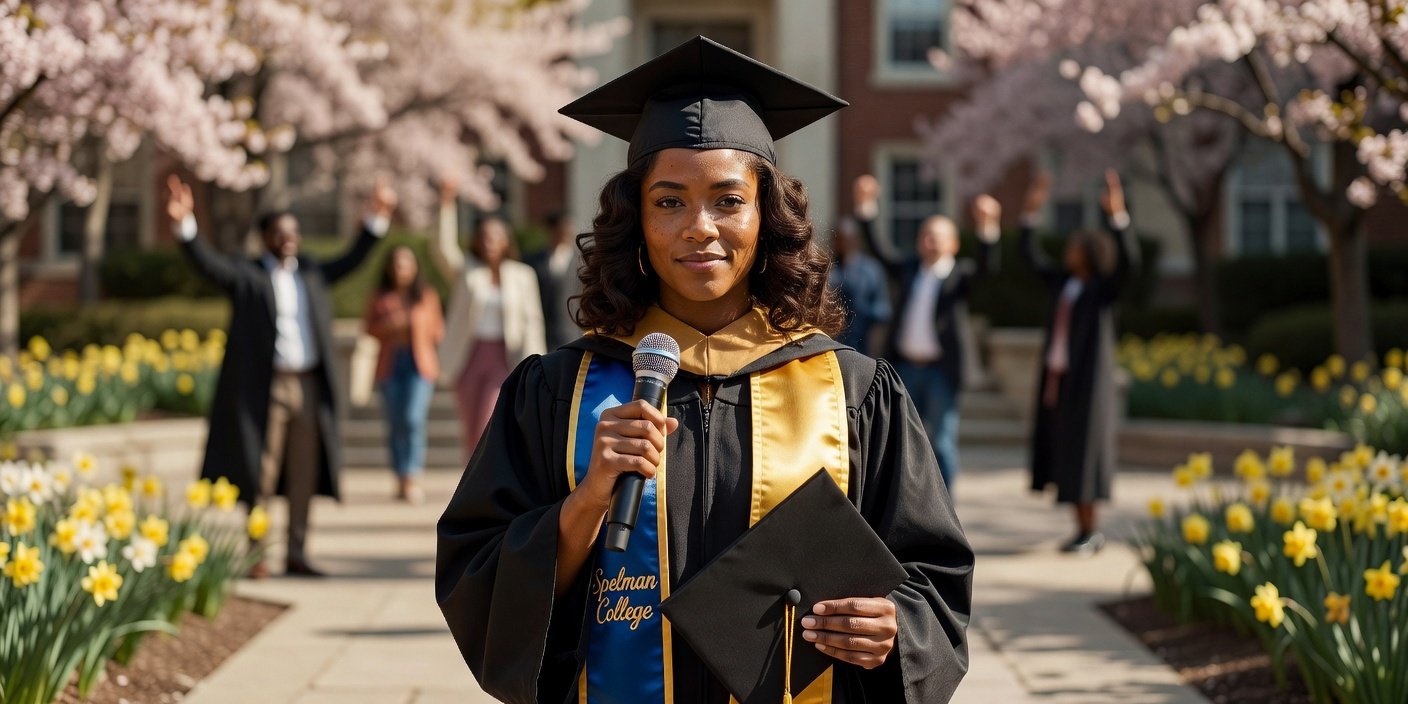
Boston hip-hop artist Janay Trench-Lesley, performing under the moniker Nay Speaks, has turned a viral social media challenge into a life-changing financial victory, securing a $5,000 tuition grant from Atlanta rapper Belly Gang Kushington. The Spelman College senior, who gained significant traction for her poignant, rhythmic verses about the “50-day countdown” to her graduation, serves as a powerful case study for how digital influence is increasingly bridging the gap in higher education funding for first-generation students.
Key Highlights
- Janay Trench-Lesley (Nay Speaks) won a $5,000 college tuition contest via a viral video submission.
- The challenge was issued by Atlanta rapper Belly Gang Kushington to assist college students struggling with tuition costs.
- The winning submission resonated deeply with viewers, documenting the journey of a first-generation student nearing graduation.
- The win underscores the rising trend of “viral philanthropy,” where social media influence directly impacts real-world economic barriers.
The Viral Intersection of Hip-Hop and Higher Education
The Anatomy of a Viral Submission
In an era where social media algorithms dictate cultural relevance, Janay Trench-Lesley’s path to a $5,000 scholarship was unconventional. Known in the Boston underground scene as Nay Speaks, the 22-year-old artist and Spelman College student didn’t just submit a generic application video; she utilized her lyrical skills to document her reality. The video, which featured her in her blue Spelman stole, was a stark, honest look at the grind of a student balancing academic pressures with the need for financial stability. “I go to class / That’s what I call my 9 to 5 / And then I grind from 5 to 9 to build a life that’s mine,” she rapped, capturing the essence of the student-athlete-artist archetype. The viral success of this video, which saw follower counts jump by thousands daily, demonstrates a shift in how scholarship narratives are being consumed by the public. It moved beyond a simple “need-based” request and became a piece of performance art that forced a conversation about the costs of higher education in the United States.
Belly Gang Kushington’s Digital Philanthropy
The contest, initiated by Atlanta rapper Belly Gang Kushington, represents a growing movement among hip-hop artists to leverage their platforms for direct community aid. By issuing a public challenge on social media, the rapper bypasses the bureaucratic red tape often associated with institutional financial aid. For artists like Kushington, who has identified with the struggle of being a first-generation success story, the act of “paying it forward” via digital engagement creates a direct line of accountability and connection. This model of philanthropy is fast, public, and highly impactful. It creates an ecosystem where the fans—the digital community—act as the jury, deciding which stories are worth funding. When Kushington visited Spelman to present the check, it wasn’t just a transaction; it was a validation of the digital discourse surrounding the cost of college.
The Economic Reality for First-Gen Students
Behind the glitz of a viral video lies a sobering economic reality: the rising cost of elite education. For students like Trench-Lesley, who grew up in Mattapan and entered Spelman with the weight of being a first-generation college graduate, the financial pressure is constant. Colleges like Spelman, which often carry high annual price tags, frequently leave students with significant “gap funding” needs—the difference between financial aid packages and the total cost of attendance. Trench-Lesley’s journey—which included launching a GoFundMe to cover remaining tuition in January—is not unique, but her ability to monetize her personal brand and digital presence to fill that gap is a modern adaptation. This case highlights a critical secondary angle: the burden of higher education is increasingly falling on students to “crowdfund” their futures, a trend that warrants deeper investigation into current institutional aid models.
Cultural Legacy and the Boston Hip-Hop Scene
While the national attention is focused on the viral nature of the $5,000 win, it is equally important to contextualize this within the vibrant tapestry of the Boston hip-hop scene. Nay Speaks is not an overnight success; she is a product of a dedicated artistic development path, having already earned a Boston Music Award. The local scene has long served as a training ground for talent that blends intellectual pursuits with rhythmic storytelling. This event brings renewed visibility to that scene, showing that Boston’s hip-hop artists are not just focused on the stage, but are deeply integrated into the academic and social fabric of the city. The integration of her artistic identity into her academic life illustrates the “scholar-artist” model that HBCUs like Spelman are famous for fostering.
The Future of Peer-to-Peer Financial Support
What happens when we move beyond standard financial aid and toward a model of decentralized, artist-led scholarship? The success of this initiative suggests that there is an appetite for a more personal, direct-to-student approach. We are likely to see more independent artists using their platforms to sponsor “micro-scholarships” or “tuition bailouts.” While this cannot replace systemic institutional reform, it creates a vital safety net. Furthermore, it encourages students to treat their educational journey as a narrative worth telling, empowering them to advocate for their own needs publicly. As we look ahead, the challenge for institutions will be to work in tandem with these digital movements, ensuring that the passion behind viral moments is translated into long-term, sustainable support for students.
FAQ: People Also Ask
Who is Nay Speaks and why is she significant?
Nay Speaks is the rap persona of Janay Trench-Lesley, a Boston-based artist and Spelman College student. She is significant for her ability to blend academic and musical ambitions, using her platform to shed light on the financial realities of being a first-generation college student.
How does the “viral philanthropy” model work?
Viral philanthropy, as seen in this case, involves public figures (often musicians or influencers) using their social media presence to launch challenges. Instead of traditional application processes, recipients are chosen based on their ability to articulate their story and resonate with the public, with the audience often acting as a signal for the most deserving recipient.
Is this $5,000 enough to solve her tuition issues?
While $5,000 provides a significant boost, for many college students, it serves as “gap funding” to cover specific costs or unexpected financial hurdles. Trench-Lesley, like many students, has utilized multiple streams of funding, including GoFundMe campaigns, to navigate the high costs of higher education.
Will we see more rappers launching scholarship programs?
Yes, this is an growing trend. From Travis Scott to Lil Durk and now Belly Gang Kushington, hip-hop artists are increasingly using their wealth and influence to tackle systemic issues in education, particularly for students at HBCUs and from underserved communities.