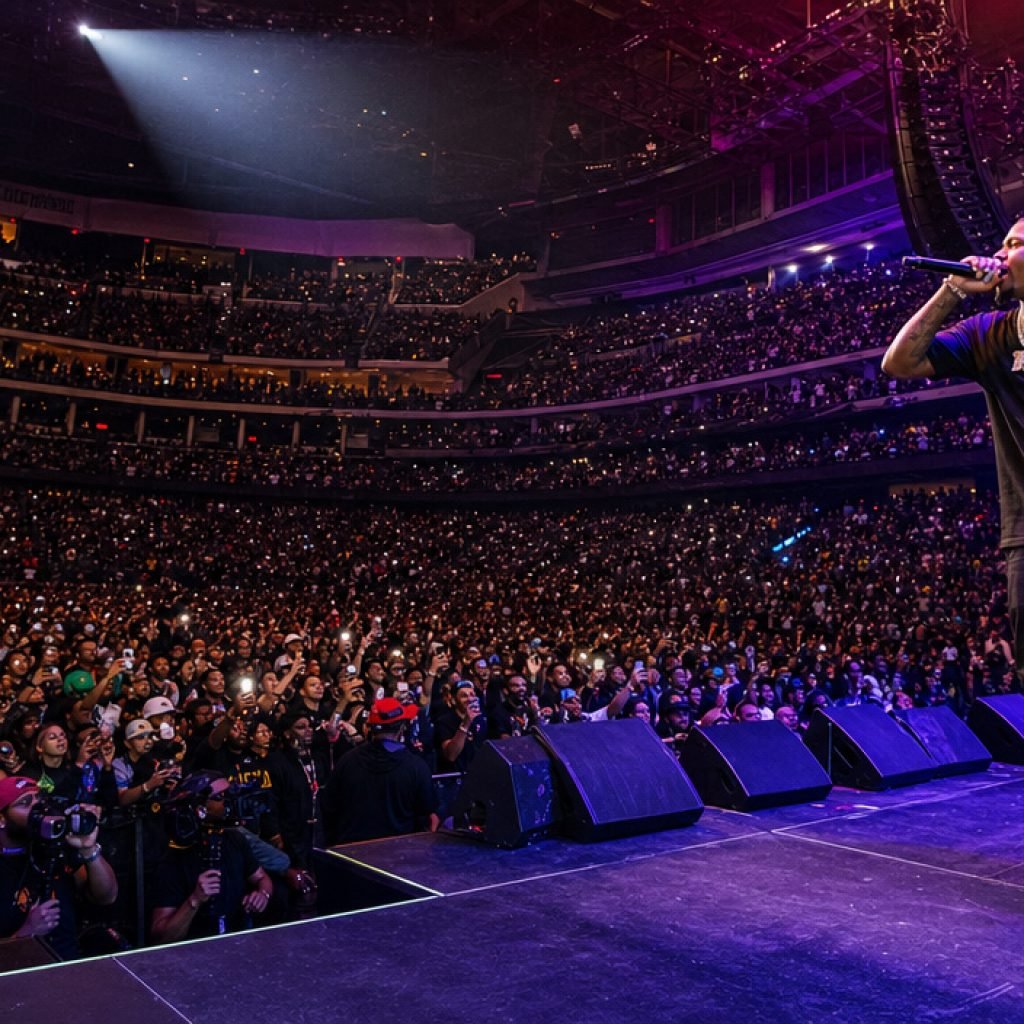
Kneecap, the Belfast-based hip-hop trio known for their blistering political satire and raucous commentary on Northern Irish life, has pivoted toward a deeply intimate sonic landscape with their latest release, “Irish Goodbye.” Dropping today, April 28, 2026, the track—which features renowned spoken-word poet Kae Tempest—serves as the emotional centerpiece of the group’s upcoming studio album, Fenian, due for release on May 1st. For Móglaí Bap, the song represents more than just a musical endeavor; it is a difficult, necessary confrontation with the suicide of his mother, Aoife Ní Riain, which occurred in 2020. The song strips away the aggressive veneer often associated with the band, replacing it with a piano-driven, melancholic reflection on grief, the fallibility of memory, and the enduring connection between parent and child.
The Shift from Agitation to Vulnerability
For years, Kneecap—comprising Móglaí Bap, Mo Chara, and DJ Próvaí—has operated on the edge of controversy. Their rise to fame was characterized by a potent mix of Irish-language fluency, defiance against established political structures, and a relentless, confrontational energy that made them polarizing figures in both Ireland and the UK. Their debut projects, including 3CAG and Fine Art, were steeped in the vernacular of West Belfast youth culture, utilizing a high-energy, rave-adjacent hip-hop style that acted as a shield for their socio-political critiques.
However, “Irish Goodbye” signals a marked departure. While Kneecap has never shied away from the personal, this track occupies a somber, delicate space rarely visited by the group. The production, helmed by Dan Carey—a frequent collaborator with acts like Fontaines D.C. and Black Midi—moves away from the synth-heavy bangers that defined their previous work. In its place is a stripped-back, acoustic-leaning atmosphere that allows Móglaí Bap’s narrative to breathe. This shift is intentional; it is an acknowledgement that while rage can fuel a movement, grief requires a different language—one of silence, memory, and reflection.
The Catalyst: Seeing a Lost Loved One Through a New Lens
The genesis of “Irish Goodbye” is rooted in a moment of serendipitous discovery. Móglaí Bap has described how he and his brother were shown archival footage of their father, a noted Irish language advocate, during the 1990s. While the primary focus of the footage was their father, the peripheral captures of their mother, Aoife Ní Riain, had a profound, unexpected impact on the rapper.
Seeing his mother in video format, alive, vibrant, and seemingly happy, triggered a neurological and emotional override of the traumatic memories that had dominated his recollection since her passing in 2020. For years, the narrative of her death had stifled the ability to remember the mundane, joyful realities of their day-to-day life. Watching the footage allowed Móglaí Bap to visualize a version of his mother that existed outside of the shadow of her depression.
This realization serves as the thematic core of the track. “Irish Goodbye” is not a eulogy or a tragic retelling; it is an attempt to reclaim the small, human moments that death often obscures: the walks in the park, the pieces of advice, the mundane disagreements. It is a song about the ‘day-to-day’ stuff that becomes monumental only in its absence. By externalizing this process through music, Móglaí Bap is inviting listeners to share in the burden, arguing that articulating these memories is a vital part of the healing process.
Kae Tempest and the Architecture of Grief
The inclusion of English spoken-word poet and artist Kae Tempest adds a layer of emotional weight and structural complexity to the song. Tempest, known for their ability to articulate the complexities of the human condition with brutal, lyrical honesty, provides a verse that bridges the gap between Móglaí Bap’s specific experience and a universal understanding of loss.
Tempest has publicly spoken about the intensity of recording the verse, noting that they were moved to tears during the process. This partnership serves as a validation of the song’s intent: to create something beautiful from the wreckage of trauma. The synergy between the Irish-language flow of Móglaí Bap and the precise, rhythmic delivery of Tempest creates a dialogue that transcends linguistic and cultural boundaries. It emphasizes the theme of collective processing—that while grief is solitary, the experience of it is a shared human constant.
Fenian: A Broader Artistic Reckoning
“Irish Goodbye” functions as the final, lingering note on the album Fenian, a project that many critics are already highlighting as the band’s most cohesive and ambitious work to date. While previous albums established the band’s brand of provocative satire, Fenian appears to be exploring the ‘day after’ the political storm.
If the band’s earlier work was about ‘smashing the state’ and fighting for linguistic recognition, Fenian is concerned with what remains after the fight—what happens to the individuals behind the political posturing. The album allows for moments of quiet, introspection, and, in the case of this track, deep sadness. It is a strategic expansion of their artistic range, proving that Kneecap is not a one-dimensional act but a group capable of nuance, pathos, and profound sensitivity.
The Burden of Shame and Mental Health Advocacy
Perhaps the most important aspect of this release is Móglaí Bap’s explicit discussion of the ‘stigma of suicide.’ In his public reflections surrounding the track, he has been vocal about the ‘extra burden of shame’ that survivors of suicide often carry. He has emphasized that the goal of the song is not to dwell on the act of death, but to alleviate the guilt associated with the memories of the departed.
By speaking openly about his mother’s depression and the subsequent loss, Móglaí Bap is contributing to a growing conversation in Ireland and beyond about mental health, particularly within communities that have historically been resistant to discussing emotional vulnerability. The song serves as a reminder that depression is an illness that can obscure a person’s worth, both to the sufferer and to those who love them.
In conjunction with the release, the band has highlighted the work of organizations like the Samaritans and the Pieta House (famous for their Darkness Into Light fundraisers). This is not merely a promotional tie-in; it is a continuation of the band’s ethos of communal support. Kneecap has long operated on the principle that the ‘personal is political,’ and by bringing the topic of suicide into the arena of public music discourse, they are challenging the silence that often accompanies such losses. It is an act of defiance, not against the state, but against the isolation that depression breeds.
Conclusion: A Legacy of Connection
As Kneecap prepares for the release of Fenian, “Irish Goodbye” stands out as a lighthouse of vulnerability. It is a testament to the idea that art can be a mechanism for processing the unspeakable. By choosing to share this piece of his private life, Móglaí Bap has gifted his audience a rare moment of connection—one that prioritizes the ‘beat of the heart’ over the noise of the headlines. It is a reminder that even for a band defined by their roar, sometimes the most powerful statement is a quiet, painful, and deeply loving goodbye.
FAQ: People Also Ask
1. What is the meaning behind the song title “Irish Goodbye”?
The title is a play on the common idiom “Irish Goodbye” (leaving a social event without saying goodbye to anyone). In the context of the song, it acts as a metaphor for the abrupt, often unchosen nature of death by suicide—a departure that leaves those remaining with unfinished business and unspoken words.
2. Who is Kae Tempest and why are they on the track?
Kae Tempest is a celebrated English spoken-word poet, author, and musician. Their collaboration with Kneecap was driven by a shared artistic goal to explore the complexities of grief. Their verse adds a layer of emotional vulnerability that complements Móglaí Bap’s narrative.
3. Is this the first time Kneecap has addressed suicide in their music?
No. In 2020, the band released a song titled “MAM,” which was also written for Móglaí Bap’s mother. The rapper has noted that he wrote “MAM” while she was still alive, hoping she would hear it, but she died before its release. “Irish Goodbye” is a continuation of that dialogue, written years later from the perspective of someone who has had more time to process the loss.
4. Where can people seek help if they are struggling with thoughts of suicide?
Kneecap has consistently directed fans toward resources like the Samaritans (freephone 116 123) and Pieta. These organizations provide confidential support for anyone in crisis and are vital resources for those struggling with mental health challenges.