In an era defined by constant connectivity, independent producer and rapper Alexander Didenko, known by his stage moniker SanMinor, is carving out a niche that moves beyond the typical braggadocio of hip-hop. By spearheading the emerging ‘Dystopian Rap’ subgenre, Didenko is turning the microphone into a tool for sociological analysis, focusing specifically on the psychological toll of digital algorithms and the pervasive nature of modern surveillance. As digital platforms increasingly mediate human interaction, SanMinor’s output serves as both a soundtrack and a critique of the digital panopticon.
Key Highlights
- Subgenre Definition: ‘Dystopian Rap’ departs from traditional hip-hop themes, focusing on digital control, privacy erosion, and the psychological impact of surveillance capitalism.
- The Artist’s Vision: Alexander Didenko (SanMinor) uses complex, glitch-heavy production to mirror the instability of life under constant algorithmic monitoring.
- Industry Shift: The genre represents a move toward hyper-specific, independent music that challenges the status quo of commercial streaming algorithms.
- Societal Commentary: Didenko’s lyrics act as a mirror to modern anxieties, specifically targeting the data-mining practices of social media and Big Tech.
The Algorithmic Rebellion: Inside the ‘Dystopian Rap’ Soundscape
Beyond the Rhythm: Defining Dystopian Rap
For decades, hip-hop has served as the ‘CNN of the streets,’ a medium for artists to report on socio-economic conditions in marginalized communities. SanMinor’s emergence marks an evolution of this tradition, shifting the focus from external material struggles to internal existential struggles. Dystopian Rap is not merely about the absence of hope; it is about the presence of control. It explores the psychological weight of being constantly tracked, profiled, and sold back to oneself by algorithms. Unlike ‘conscious rap’ of the 90s, which often focused on political figures or systemic government inequality, Dystopian Rap focuses on the subtle, invisible structures of Surveillance Capitalism. The music is often characterized by a disjointed, ‘glitchy’ aesthetic that feels intentionally disrupted, mirroring the erratic and hyper-stimulated nature of a life lived through a smartphone screen.
The Architecture of Digital Surveillance in Songwriting
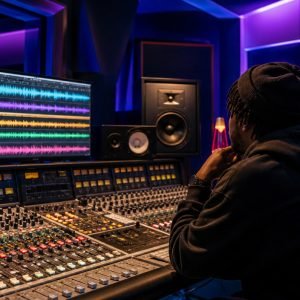
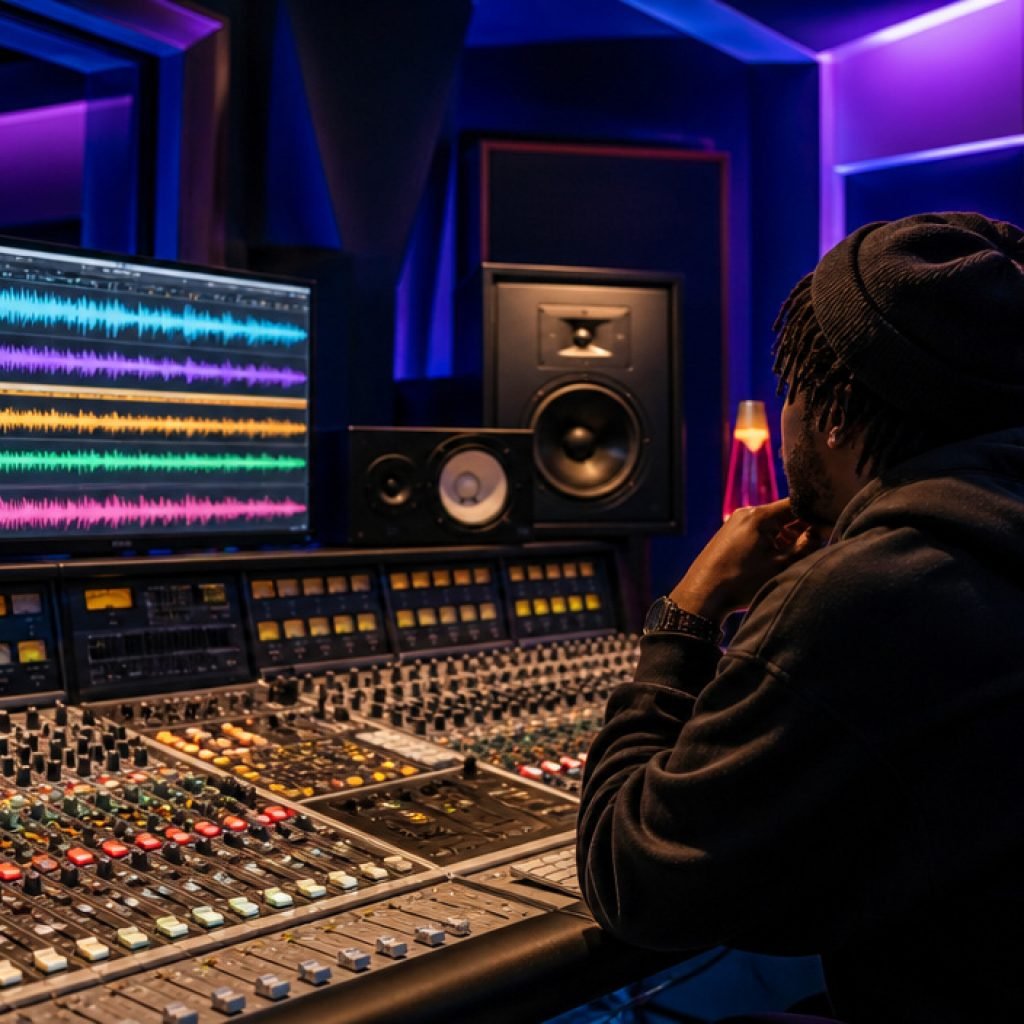
Alexander Didenko’s approach to production is intrinsically linked to his thematic goals. He often utilizes dissonant soundscapes and repetitive, looping patterns that mimic the ‘infinite scroll’ experience of modern social media. By incorporating audio cues that recall interface notifications or feedback loops, Didenko forces the listener to confront the medium through which they consume the music itself. This is an intentional artistic choice. By building the sound of his tracks around the aesthetic of digital fragmentation, Didenko argues that the listener cannot simply ‘consume’ the music passively; they must engage with the uncomfortable reality that they are also data points being optimized. He treats the digital interface as a character, and often, an antagonist in his narratives.
Psychological Impact: Music as a Mirror for Modern Control
Perhaps the most compelling aspect of SanMinor’s work is the exploration of the mental health crisis exacerbated by digital saturation. In tracks that explore the ‘Dystopian Rap’ ethos, there is a recurring focus on the fatigue of constant performance—the feeling of needing to curate an online identity that aligns with algorithmic preference. This is a profound shift in hip-hop storytelling. Instead of narrating a story of surviving a dangerous neighborhood, Didenko narrates the struggle of surviving a dangerous interface. He articulates the anxiety of knowing that one’s preferences are harvested, categorized, and monetized. This resonates with a generation that has grown up entirely within the digital enclosure, providing a vocabulary for a modern form of alienation that is rarely discussed in mainstream music charts.
The Evolution of Independent Hip-Hop
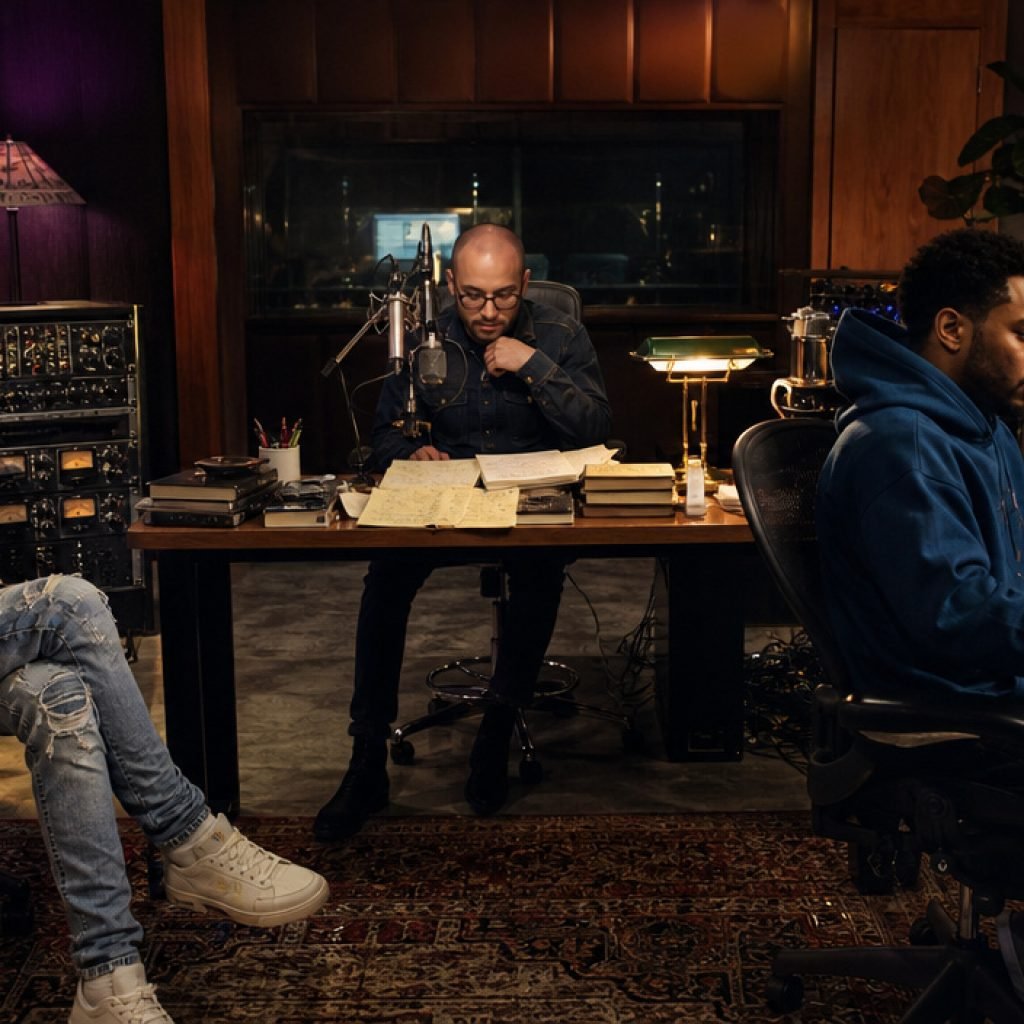
SanMinor’s path highlights a broader trend in the music industry: the rise of the ‘critique-as-product’ model in independent spaces. Because Didenko operates as an independent producer, he is not beholden to major label A&R teams who might demand a more commercially ‘safe’ sound or a focus on viral dance-pop tropes. This independence is essential to the credibility of Dystopian Rap. If the genre were backed by the very tech conglomerates that Didenko critiques, the messaging would lose its bite. Instead, he leverages direct-to-fan distribution models to build a community around the music—not just as entertainment, but as a form of intellectual dissent against the very platforms where he hosts his tracks.
Future Trajectory: What Happens When the Algorithm Listens?
Looking forward, the growth of Dystopian Rap suggests a potential pivot in the broader cultural conversation about AI and personal privacy. As AI-generated content becomes more prevalent and the line between creator and consumer blurs further, artists like SanMinor offer a necessary, albeit bleak, perspective. His work raises the question: can art still be authentic in a world where every creative choice is influenced by predictive modeling? Didenko suggests that the only way to retain agency is to make the algorithm the subject of the art, essentially ‘hacking’ the feedback loop by forcing it to process its own nature. Whether this becomes a widespread subgenre or remains a niche intellectual movement, SanMinor has established a blueprint for how future artists might protest the digital enclosure.
FAQ: People Also Ask
Q: What exactly defines the ‘Dystopian Rap’ subgenre?
A: Dystopian Rap is a subgenre of hip-hop characterized by its lyrical focus on digital surveillance, the ethics of social media, and the psychological impact of AI-driven algorithmic control, usually set to glitch-heavy or industrial-influenced production.
Q: How does SanMinor’s music differ from traditional conscious hip-hop?
A: While traditional conscious hip-hop focuses on systemic political and social injustice in the real world, Dystopian Rap focuses on the systemic psychological and existential issues created by the digital/virtual world, prioritizing the ‘man vs. machine’ conflict over ‘man vs. society’ in a geographic sense.
Q: Why is Alexander Didenko using this genre to critique surveillance?
A: Didenko uses the genre to draw attention to the invisible, pervasive nature of surveillance capitalism, arguing that current music is too focused on hedonism to address the existential threats posed by data mining and constant connectivity.
Q: Is Dystopian Rap a growing trend in the music industry?
A: While still an independent niche, the increasing public awareness of data privacy and AI ethics suggests that themes of digital dissent and ‘glitch’ aesthetics are becoming more relevant to modern listeners, positioning the genre for potential future expansion.