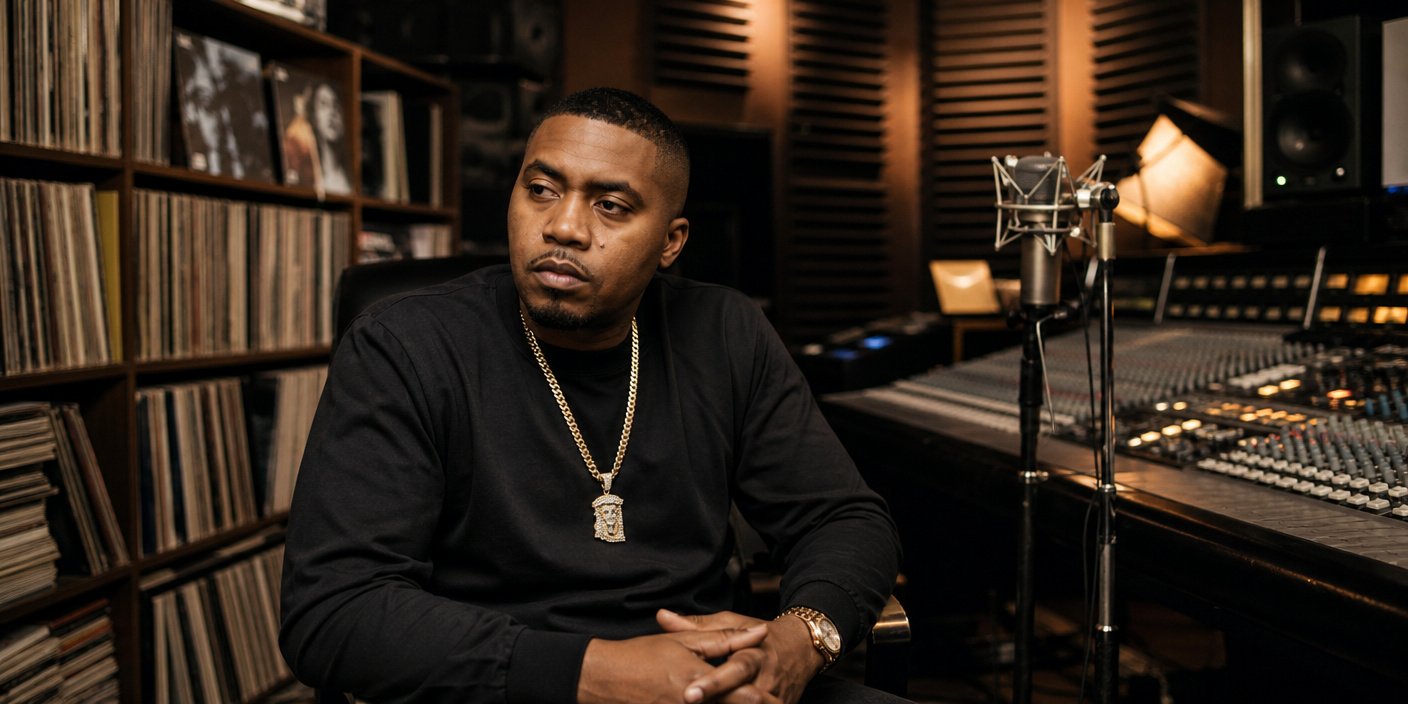
Nas, the Queensbridge poet and hip-hop statesman, has issued a stark, unwavering warning to the global music industry regarding the devaluation of the culture’s foundational artists. In a recent open letter that has sent ripples through the music community, the ‘Illmatic’ rapper criticized the current industry climate for prioritizing short-term algorithmic trends over the preservation of hip-hop’s history. Nas, whose career spans over three decades, argues that the very architects of the sound are being marginalized, exploited, and stripped of their due credit and compensation.
Key Highlights
- Critique of Exploitation: Nas explicitly calls out the music industry for historically underpaying and mismanaging the catalogs of foundational hip-hop artists.
- Trend vs. Legacy: The letter highlights the friction between the industry’s focus on short-term social media virality and the long-term stewardship of musical history.
- Call for Unity: A demand for industry-wide reform, urging stakeholders to bridge the gap between emerging talent and the ‘greats’ who built the genre.
- Economic Precarity: The article emphasizes that the lack of ownership and royalty control for original artists is an urgent issue that threatens the integrity of the art form.
Reclaiming the Soul of the Culture
The current music landscape is dominated by the relentless pursuit of ‘content’—a term that Nas and other traditionalists find inherently reductive. For an artist who elevated the craft of rap to the level of high literature, the transformation of hip-hop into a hyper-fast, transient commodity is not just a shift in preference; it is a systematic dismantling of artistic dignity. When the industry shifts its focus solely toward what is trending on platforms like TikTok or Instagram, it inevitably creates a vacuum where the historical context of the music is lost.
The Erosion of Historical Value
Nas’s critique strikes at the heart of how hip-hop is consumed today. By treating music as a disposable utility, the industry risks alienating the very foundation upon which it is built. This is not merely a complaint about changing sounds; it is an indictment of the institutional memory loss that pervades major labels and streaming giants. When foundational artists are treated as relics rather than living, breathing contributors to the art form, the entire ecosystem loses its legitimacy. The industry’s failure to properly compensate and honor those who laid the groundwork—the pioneers of the 1970s, 80s, and 90s—is presented by Nas as a moral failure of the current corporate hierarchy.
The Economic Cost of ‘Content’ Culture
There is a profound economic component to this argument. The music industry’s push toward massive volumes of short-form audio has accelerated the devaluation of master recordings and publishing rights. Nas suggests that many of the ‘greats’ have been subjected to predatory contracts that effectively strip them of ownership, allowing large entities to profit from the legacy of these artists without reciprocal financial support. This leads to a scenario where legendary figures are forced to watch their life’s work being sampled, re-imagined, and monetized by others, often without receiving the royalties or credit they deserve. This creates a cycle of poverty for those who should be living as the kings and queens of the culture they birthed.
Towards a New Model of Creative Solidarity
Nas’s call for unity is not just a plea for respect; it is a demand for a structural paradigm shift. He advocates for a system where artists are empowered to retain ownership of their intellectual property, where mentorship between generations is formalized, and where the industry takes active steps to protect the economic rights of its predecessors. This involves legal reforms, clearer catalog management, and perhaps most importantly, a cultural shift in how music executives approach artist relations. By insisting on a model that prizes longevity and deep historical knowledge over the ‘next big thing,’ Nas is challenging the industry to prove that it respects the very culture from which it extracts its massive, multi-billion-dollar profits.
The Future of Hip-Hop Preservation
Looking ahead, the tension between the tech-driven future and the human-centered past will define the next decade of music. If the industry fails to heed the warnings of figures like Nas, the risk is a hollowed-out culture where the music is separated from the stories, struggles, and triumphs of those who created it. Preservation efforts—ranging from digital archives to better-regulated royalty distributions—are no longer optional; they are essential for the survival of hip-hop’s authentic spirit. The conversation Nas has sparked serves as a crucial check on the unchecked capitalism of the music business, reminding every stakeholder that without the foundation, the structure cannot stand.
FAQ: People Also Ask
Q: Why does Nas feel the music industry has lost its way?
A: Nas argues that the industry’s hyper-focus on short-term trends and algorithmic virality has led to the neglect and exploitation of foundational artists, whose historical contributions are being overshadowed or commercially mismanaged.
Q: What does Nas mean by ‘foundational artists’?
A: This term refers to the pioneers and innovators who built hip-hop from its inception in the 1970s and 80s. These are the individuals who created the blueprints for the genre’s sound, rhythm, and lyrical style, many of whom have seen their intellectual property exploited by larger corporate entities.
Q: Is this only about money, or is it about respect?
A: It is both. While economic issues—such as loss of ownership and inadequate royalties—are central, Nas’s critique is also deeply rooted in the need for cultural respect, proper crediting, and the acknowledgment that hip-hop is a history-rich art form that deserves to be treated with academic and creative seriousness rather than as disposable content.