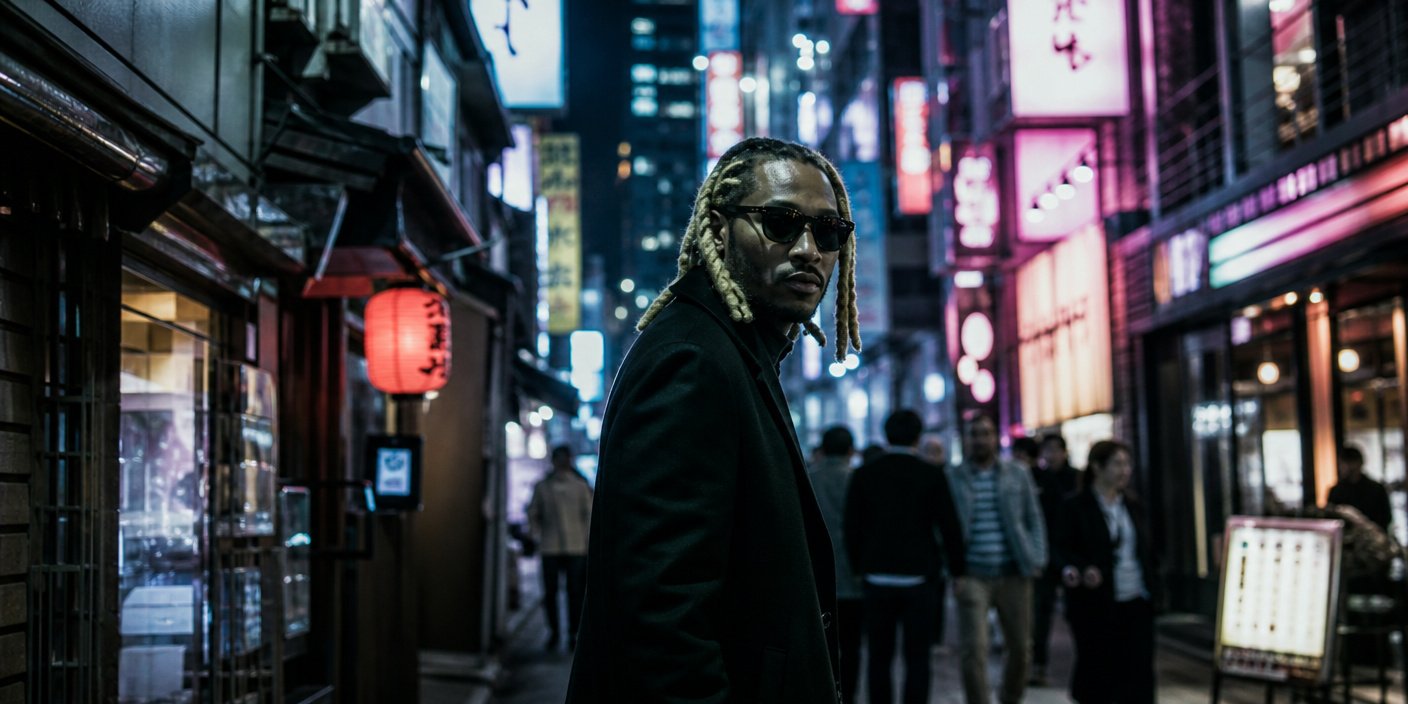
In a bold expansion of his visual identity, multi-platinum hip-hop icon Future has unveiled the official music video for “No Misery,” a standout track from his latest 12th studio album, “THE REAL ME.” Directed by the visionary filmmaker Loris Russier, the video serves as a high-octane, neon-drenched exploration of the artist’s sound, shot entirely on location in Tokyo, Japan. This collaboration marks a significant departure from standard industry aesthetics, leaning into the juxtaposition of Future’s signature trap rhythms and the frenetic, futuristic energy of the Japanese capital.
Key Highlights
- Global Visual Scale: Future’s “No Misery” video utilizes the sprawling, high-contrast urban landscape of Tokyo to create a cinematic experience that transcends traditional hip-hop music video tropes.
- Directorial Vision: The project was helmed by Loris Russier, known for his polished, high-fidelity visual storytelling, who captures the artist in a series of immersive, atmospheric settings.
- Album Context: The release serves as a crucial visual component for “THE REAL ME,” Future’s 12th studio album, which continues his streak of high-charting, critically acclaimed projects.
- Aesthetic Evolution: The video highlights a shift toward more international production scales, signaling a move for the artist to integrate global motifs into his promotional cycles.
Neon Nights & Global Rhythms: The Cinematic Vision of ‘No Misery’
The release of the “No Misery” music video is more than just a promotional tool; it is a statement piece. By choosing Tokyo as the canvas, Future and director Loris Russier have leaned into an aesthetic that mirrors the complex, often chaotic energy of the track itself. Tokyo, with its endless intersections of light, technology, and tradition, provides the perfect backdrop for a song that deals with the introspective and often isolating nature of fame—themes that are central to Future’s current project, “THE REAL ME.”
The Visual Language of Loris Russier
Loris Russier’s direction is characterized by a deliberate, almost surgical approach to framing. Throughout the “No Misery” video, viewers are treated to shots that play with light, shadow, and reflection. Rather than relying on simple performance shots, Russier utilizes the architecture of Tokyo—the narrow alleyways of Shinjuku and the towering digital displays of Shibuya—to frame Future as a monolithic figure navigating a world that is moving at a different speed than his own.
This isn’t just about showing an artist in a cool location. The video uses the environment to amplify the song’s message. When Future raps about the isolation of his position, the camera work emphasizes his solitude amidst the crowded streets. The color grading is sharp and cold, punctuated by the vivid, artificial saturation of neon signage, creating an visual parallel to the high-pressure environment of the modern hip-hop industry.
Tokyo as a Character
In music history, cities have often served as more than just backdrops; they become characters in the narrative. For “No Misery,” Tokyo functions as the antagonist and the stage simultaneously. The city’s perpetual motion—the trains, the crowds, the light trails—contrasts with Future’s measured, rhythmic flow. This technical choice allows the audience to experience the “No Misery” track not just as an auditory input, but as a sensory journey. The use of long-exposure shots and wide-angle lenses helps to contextualize the artist against the massive scale of the cityscape, highlighting the contrast between the individual and the infinite urban expanse.
The Strategic Importance of ‘THE REAL ME’
“THE REAL ME” is not just another addition to a prolific discography; it is a pivot. Releasing a video of this caliber for a track like “No Misery” suggests that Future is heavily invested in the visual legacy of this album. With 12 studio albums under his belt, the challenge for any artist of his stature is to remain fresh while maintaining the sonic identity that made them a legend in the first place. This video proves that Future is successfully bridging the gap between his roots in the Atlanta trap scene and a more expansive, globalized vision of what a hip-hop star can be in the current decade.
The industry has seen a notable shift toward international filming locations, with artists increasingly seeking out aesthetic environments that provide high production value and unique visual palettes. By bringing the “THE REAL ME” era to Tokyo, Future is tapping into a global cultural market that continues to consume music not just through streaming, but through high-quality, cinematic video content. This move positions the album for longevity, ensuring that the visual component of the music remains relevant well after the initial release hype.
Examining the Soundscape
Musically, “No Misery” occupies a space that is both dark and infectious. The production relies on heavy, atmospheric synths and a bass-heavy percussion track that feels distinctly “Future.” However, there is a lyrical vulnerability present in the track that matches the visual solitude captured in the Tokyo scenes. This alignment between the audio and the visual is what elevates the project above standard music video fare. It is clear that every frame was storyboarded with the specific intent of conveying the mood of the song, making the “No Misery” video a masterclass in modern music video production.
As we look at the trajectory of Future’s career, this collaboration with Russier feels like a natural evolution. The artist has always been known for pushing boundaries, whether through his flow, his production choices, or his public persona. Now, he is pushing the boundaries of his visual presentation, proving that even with over a decade of success, there is still room for reinvention. The success of “No Misery” in the coming weeks will likely depend not just on the strength of the track on streaming platforms, but on how effectively this high-gloss, high-concept video captures the imagination of his massive, global fanbase.
FAQ: People Also Ask
Q: Where was the ‘No Misery’ music video filmed?
A: The music video for “No Misery” was filmed entirely on location in Tokyo, Japan, capturing the city’s unique neon aesthetics and urban atmosphere.
Q: Who directed Future’s ‘No Misery’ music video?
A: The video was directed by Loris Russier, a filmmaker known for his distinctive, high-fidelity visual style and technical precision.
Q: Which album does ‘No Misery’ appear on?
A: “No Misery” is a featured track on Future’s 12th studio album, “THE REAL ME.”
Q: Why is the Tokyo location significant to the video?
A: The Tokyo setting was chosen to serve as a visual metaphor for the themes of the song, contrasting the artist’s introspective lyrics with the high-energy, isolating nature of a global metropolis.