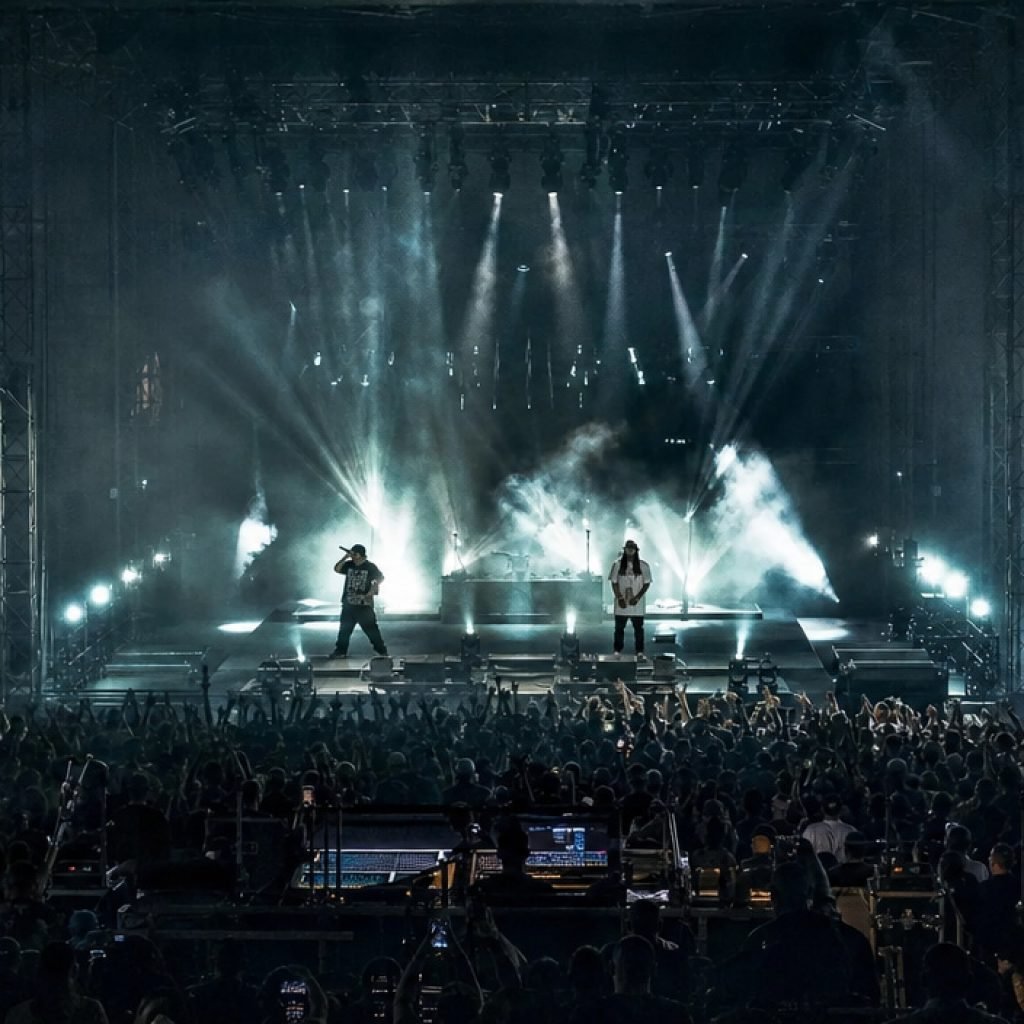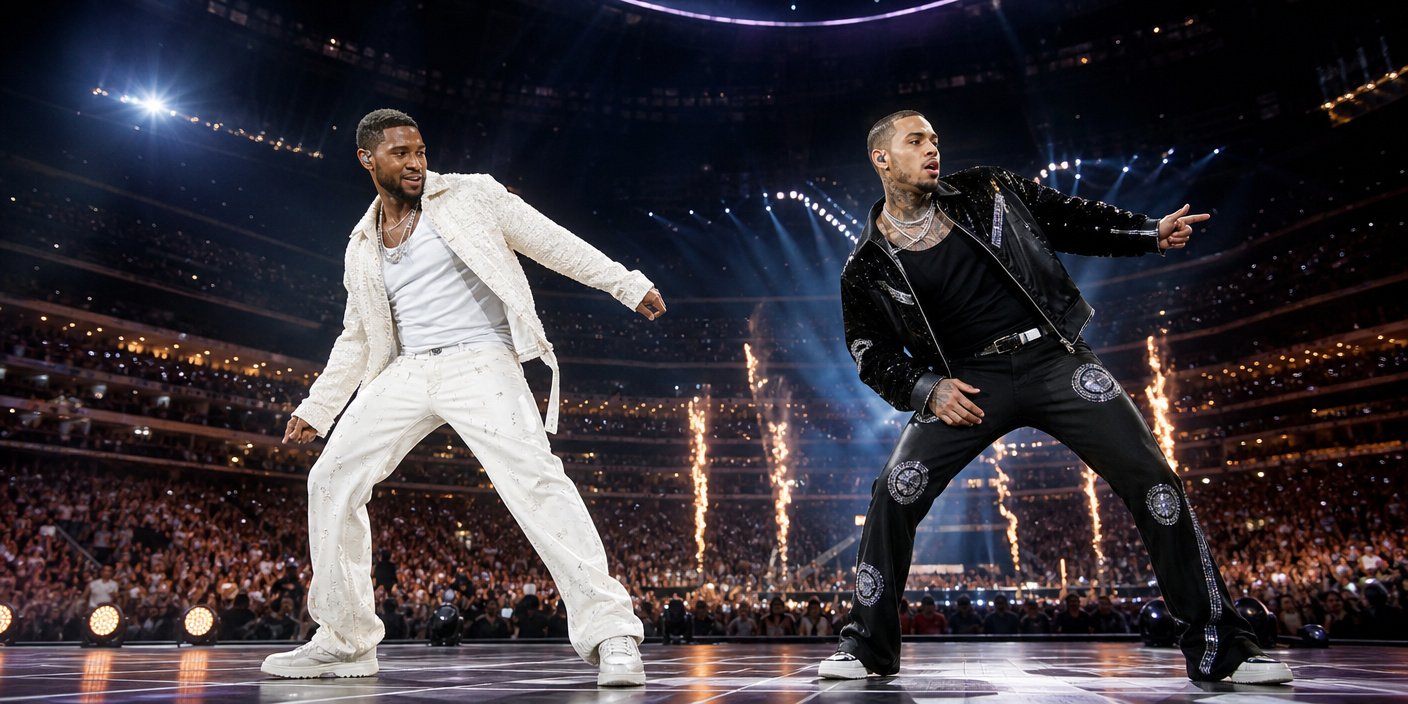
In a decisive move that cements the dominance of contemporary R&B in the live music industry, superstars Usher and Chris Brown have officially announced the expansion of their massive co-headlining venture, “The R&B Tour.” Following a historic run that saw the duo sell out 13 consecutive stadium shows, the artists have added eight additional dates to the itinerary. This expansion comes on the heels of overwhelming fan demand, a response that has already pushed the tour to a staggering $101 million in gross revenue and moved over 566,000 tickets. As the industry watches closely, the extension highlights not just the individual drawing power of these two performers, but the sustained, high-level appeal of stadium-scale R&B production in the current touring ecosystem.
Key Highlights
- Unprecedented Gross: The tour has already generated $101 million in revenue, underscoring its status as one of the highest-performing concert series of the year.
- Sold-Out Trajectory: With 13 shows already completed, every single date has been a total sell-out, leading directly to the expansion.
- Ticketing Momentum: The tour has successfully sold 566,000 tickets, reflecting a massive fan base ready to engage with major-market stadium performances.
- Expansion Details: Eight new dates have been added, providing additional opportunities for fans in key markets who missed out during the initial release.
The Economics of High-Stakes Touring
The decision to extend “The R&B Tour” is more than a reaction to fan interest; it is a calculated masterclass in modern live entertainment economics. Typically, high-grossing tours that reach the $100 million threshold in such a short window face the logistical “bottleneck” problem—securing stadium-sized venues, which are notoriously difficult to book on short notice due to sports league schedules and existing festival commitments. However, the success of the first 13 shows has created significant leverage for the tour’s promoters, allowing for a strategic expansion into markets where demand signals remained unmet.
Analyzing the $101 Million Milestone
To reach a gross of $101 million with only 13 shows implies an average revenue of approximately $7.7 million per night—a figure that places “The R&B Tour” in the top tier of international touring acts. This performance metric suggests that ticket pricing, while premium, has hit the “sweet spot” for fans, balancing exclusivity with accessibility. For promoters like Live Nation or AEG Presents, which often handle productions of this magnitude, these numbers validate the shift toward pairing legacy-status R&B titans. By consolidating their fan bases, Usher and Chris Brown have effectively minimized the risk associated with individual stadium runs, creating a “must-see” event culture that persists long after the tickets have been released.
Cultural Impact and Genre Resurgence
Beyond the raw statistics, the success of this tour marks a pivotal moment for R&B. For years, skeptics questioned whether R&B could sustain stadium-level appeal compared to pop or hip-hop tours. “The R&B Tour” has effectively debunked this narrative. By integrating elaborate production values, complex choreography, and the deep, decades-long catalogues of two of the genre’s most influential figures, the tour has become a cultural touchpoint.
The Role of Legacy and Contemporary Demand
Usher, with his recent surge in public profile, and Chris Brown, whose consistent touring capacity has long been a staple of the industry, create a unique synergy. This tour serves as both a retrospective of R&B’s evolution and a showcase of its future. The 566,000 tickets already sold represent a multigenerational audience, blending fans who grew up with their early-2000s hits with a younger cohort discovering the genre through viral social media trends. This cross-generational appeal is the primary engine behind the tour’s ability to sell out stadium-sized venues, which require a much wider reach than standard arena dates.
Operational Challenges of Stadium Extensions
Adding eight new dates to an existing stadium tour is an operational undertaking that requires massive coordination. Stadiums require longer load-in and load-out times, specialized stage crews, and complex logistical chains for lighting, sound, and pyrotechnics. Expanding a tour in the middle of a high-grossing run requires a seamless integration of personnel and equipment management. The fact that the tour organizers could secure these new dates signifies a highly efficient tour management team. Furthermore, adding these dates extends the economic impact on the host cities. Typically, a stadium show of this caliber provides a significant stimulus to local hospitality, transportation, and tourism sectors. By choosing these new locations, the tour is effectively exporting this economic stimulus to new regions, maximizing the tour’s reach before the cycle concludes.
Looking Ahead: The Future of ‘The R&B Tour’
As the tour moves into these eight additional dates, industry experts are curious about whether a secondary extension might be on the horizon. While the current focus is on executing these new shows, the precedent set by the initial 13 sold-out performances creates high expectations. If the demand remains consistent, we may see a transition into international markets, as both artists hold immense sway in European and Asian territories. Regardless of whether the tour expands further, its current status as a $100 million-plus juggernaut has already secured its place in the history books for 2024-2025 touring metrics.
FAQ: People Also Ask
Q: Will there be even more dates added to the tour after these eight?
A: While the current announcement specifies eight new dates, tour organizers have not ruled out further expansions. Given the historic demand and the $101 million gross, capacity for additional shows remains a possibility if venue availability allows.
Q: How do Usher and Chris Brown handle the logistical complexity of stadium shows?
A: Both artists utilize high-level production teams (typically led by top-tier tour directors) who coordinate with local unions, venue management, and security to ensure stadium-scale equipment, like the custom stages and audio systems, can be moved efficiently from city to city.
Q: What is the main driver behind the 566,000 tickets sold?
A: The primary driver is the unique combination of Usher and Chris Brown on a single ticket. By co-headlining, they combine two massive fan bases into one, allowing them to book stadiums instead of smaller arenas, while the nostalgia factor of their catalogs drives intense urgency among fans.
Q: How does this tour compare to other major stadium tours?
A: With a gross of $101 million across only 13 shows, this tour is performing at an elite level, comparable to the top 1% of global touring acts. It is currently setting a benchmark for R&B-focused stadium tours, proving the genre’s enduring commercial viability.