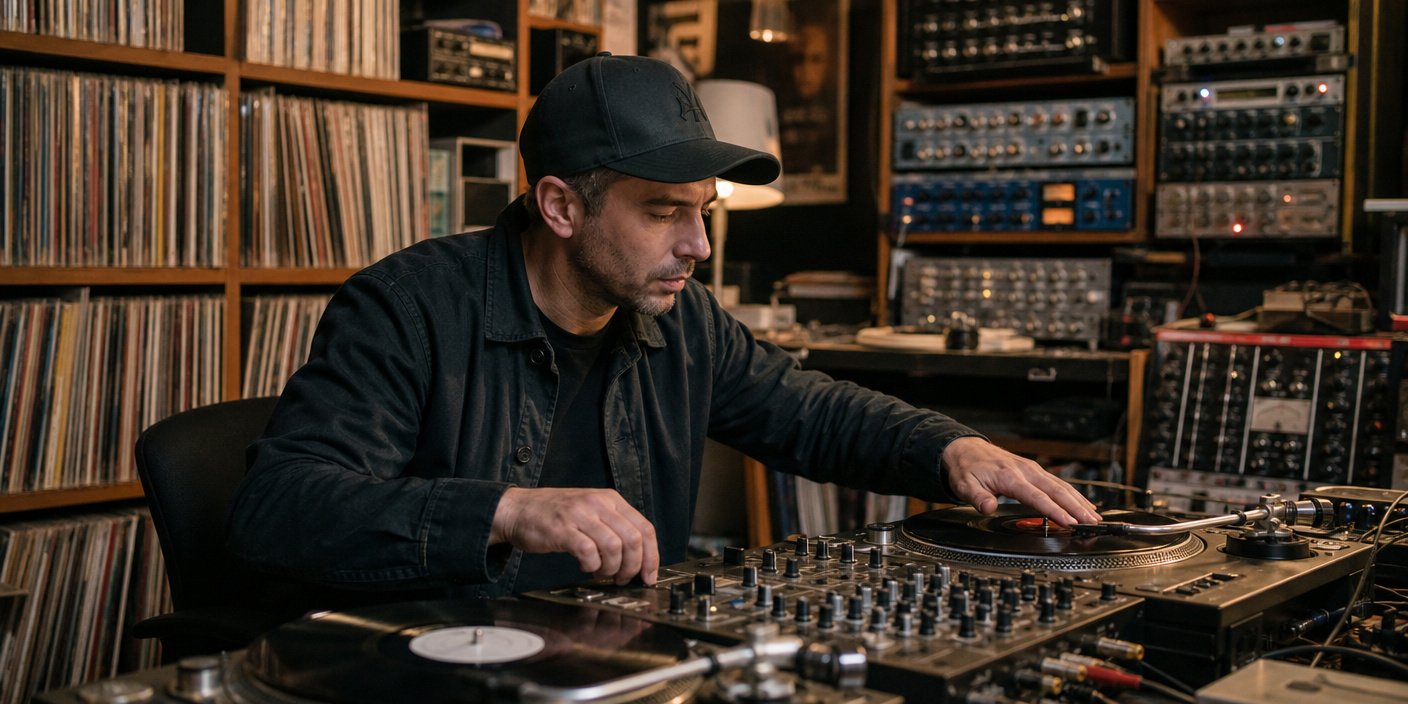
In the sprawling, sun-drenched landscape of Los Angeles hip-hop, few figures have cast as long or as eclectic a shadow as Lucas Macfadden, better known as Cut Chemist. A cornerstone of the L.A. scene, Macfadden did not merely participate in the evolution of the genre; he actively architected a new vocabulary for it. By fusing the grit of Golden Age hip-hop with the melodic complexities of samba, funk, and even the orchestral bombast of film scores like ‘Star Wars,’ Cut Chemist transformed the turntable from a simple playback device into a sophisticated instrument of ethnographic composition. His career serves as a masterclass in how to bridge the gap between niche vinyl collecting and chart-topping musical accessibility, influencing generations of producers in the process.
Key Highlights:
- Founding member of the seminal alternative hip-hop group Jurassic 5, which redefined West Coast underground rap in the 1990s.
- A foundational architect of the Latin-alternative band Ozomatli, showcasing his versatility in world music and percussion-heavy arrangements.
- Pioneered a ‘crate-digging’ philosophy that treats forgotten vinyl records as historical artifacts, blending ‘Star Wars’ cinematic themes with traditional samba and soul.
- Recognized for his technical turntablism prowess, particularly his ability to synchronize complex samples in live performances, as seen in projects like ‘The Audience’s Listening.’
- Transitioned from a local L.A. DJ hero to an internationally touring producer and cultural curator.
The Architecture of the Cut Chemist Sound
The trajectory of Cut Chemist is inextricably linked to the cultural fabric of Los Angeles. While many of his contemporaries were focused solely on the boom-bap aesthetic prevalent in New York, Macfadden was looking outward. His work, particularly his involvement with Jurassic 5, highlighted a refusal to be categorized strictly as a ‘rap DJ.’ Instead, he approached production with the mind of a musical archaeologist. His ability to weave together disparate sounds—moving seamlessly from the aggressive energy of a breakbeat to the intricate, syncopated rhythms of Brazilian samba—became his signature. This wasn’t just genre-blending; it was genre-collapsing.
The Jurassic 5 Foundation
To understand the magnitude of Cut Chemist’s influence, one must look at the impact of Jurassic 5. Along with Nu-Mark, Chali 2na, Akil, Zaakir, and Marc 7, Macfadden helped forge a sound that prioritized vocal harmony and lyrical dexterity over the gangsta rap tropes that dominated the L.A. airwaves at the time. His production on tracks like ‘Concrete Schoolyard’ established a blueprint for ‘conscious’ hip-hop that was commercially viable yet fiercely independent. The group’s reliance on organic, sample-heavy production relied heavily on his ability to curate and ‘flip’ rare records, effectively teaching a generation of listeners about the deep history of soul and funk that underpinned hip-hop culture.
Sonic Curation as Anthropology
Beyond the studio, Cut Chemist has always viewed his role as a curator. His work with Ozomatli brought a distinct Latin-fusion sensibility to his portfolio, broadening his audience and his technical palette. When he samples ‘Star Wars’ or obscure library music, he is not just looking for a catchy hook; he is looking for a texture that tells a story. This anthropological approach to music—where he treats a record as a piece of cultural history—has separated him from producers who view samples merely as tools for rhythm. By integrating global rhythms into the hip-hop structure, he helped push the genre toward a more inclusive, international future.
Technical Prowess and the Turntablist Evolution
Cut Chemist’s contribution to the ‘playbook’ of L.A. hip-hop is perhaps best exemplified by his technical innovations on the turntable. He treated the decks not just as a tool for mixing, but as an instrument capable of solo performance. During his live sets, he demonstrated that a DJ could be a lead instrumentalist. This technicality provided a bridge to a broader audience that appreciated the performative aspect of music production. His albums, such as ‘The Audience’s Listening,’ served as a showcase for this philosophy, proving that a producer could sustain a narrative arc across an entire record using only samples and sound design. This shifted the focus of hip-hop production from ‘making beats for rappers’ to ‘creating compositions for listeners.’
Historical Context: The Vinyl Preservation Movement
One secondary angle often overlooked in profiles of Cut Chemist is his role in the vinyl preservation movement. In an era where digital streaming has made music ephemeral, Macfadden’s commitment to the physical medium serves as a historical archive. He has consistently championed the importance of preserving original pressings, treating them with the reverence usually reserved for fine art. This perspective has inspired a subset of producers to move away from easy-access digital loops and back toward the tactile, physical act of crate-digging, which intrinsically links modern production to its analog ancestors.
Future Predictions: The Hybridized Producer
Looking toward the future, the ‘Cut Chemist playbook’ is likely to become the standard. As artificial intelligence and digital sampling become more accessible, the ‘human’ element of curation—the specific, idiosyncratic taste of a producer who can see the connection between, say, a ‘Star Wars’ soundtrack and a 1970s samba record—becomes more valuable. The future of production lies in the synthesis of global sounds, and Macfadden’s early experimentation with this model makes him a prophet of the modern, borderless musical landscape.
The Economic Impact of Independent Curation
Finally, we must consider the economic angle: by maintaining his status as an independent artist and a curator of his own legacy, Cut Chemist has navigated the music industry’s transition from major label dominance to the independent creator economy with remarkable consistency. His business model, centered on touring, live performance, and dedicated fanbase building, offers a template for how producers can sustain a multi-decade career without relying on the volatility of top-40 radio play.
FAQ: People Also Ask
Q: Who is Cut Chemist and what is his real name?
A: Cut Chemist is the professional moniker of Lucas Macfadden, an American DJ and producer known for his work in the hip-hop groups Jurassic 5 and Ozomatli.
Q: What is Cut Chemist’s production style?
A: His style is characterized by extensive ‘crate-digging,’ where he samples obscure vinyl records—ranging from samba and funk to movie soundtracks—to create complex, genre-bending hip-hop compositions.
Q: Why is Cut Chemist considered a pioneer in L.A. hip-hop?
A: He helped pioneer the alternative hip-hop movement in the 1990s, shifting the focus away from gangsta rap tropes toward lyrical dexterity, vocal harmony, and eclectic, sample-heavy production.
Q: Is Cut Chemist still active?
A: Yes, Cut Chemist continues to produce music, perform live, and curate vinyl sets, maintaining his legacy as one of the most respected technical turntablists in the industry.