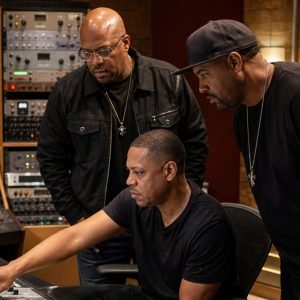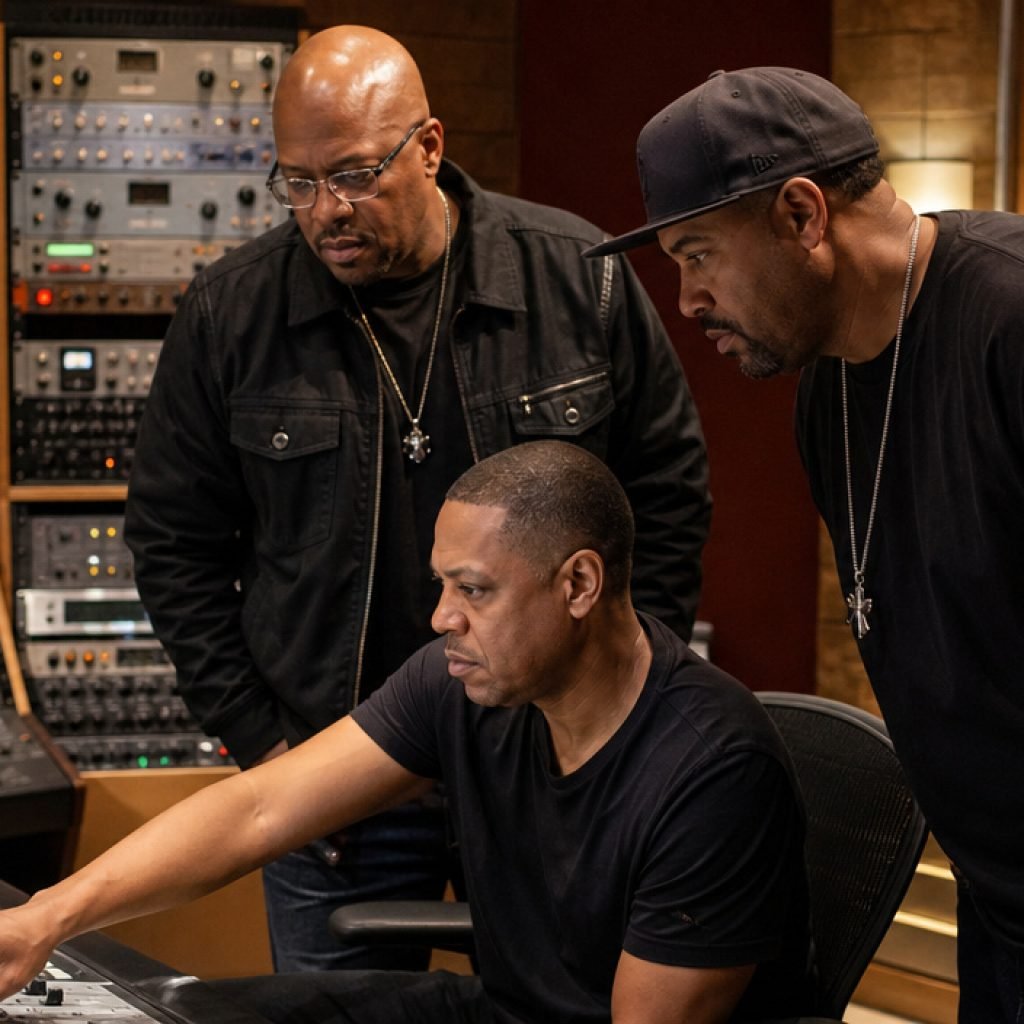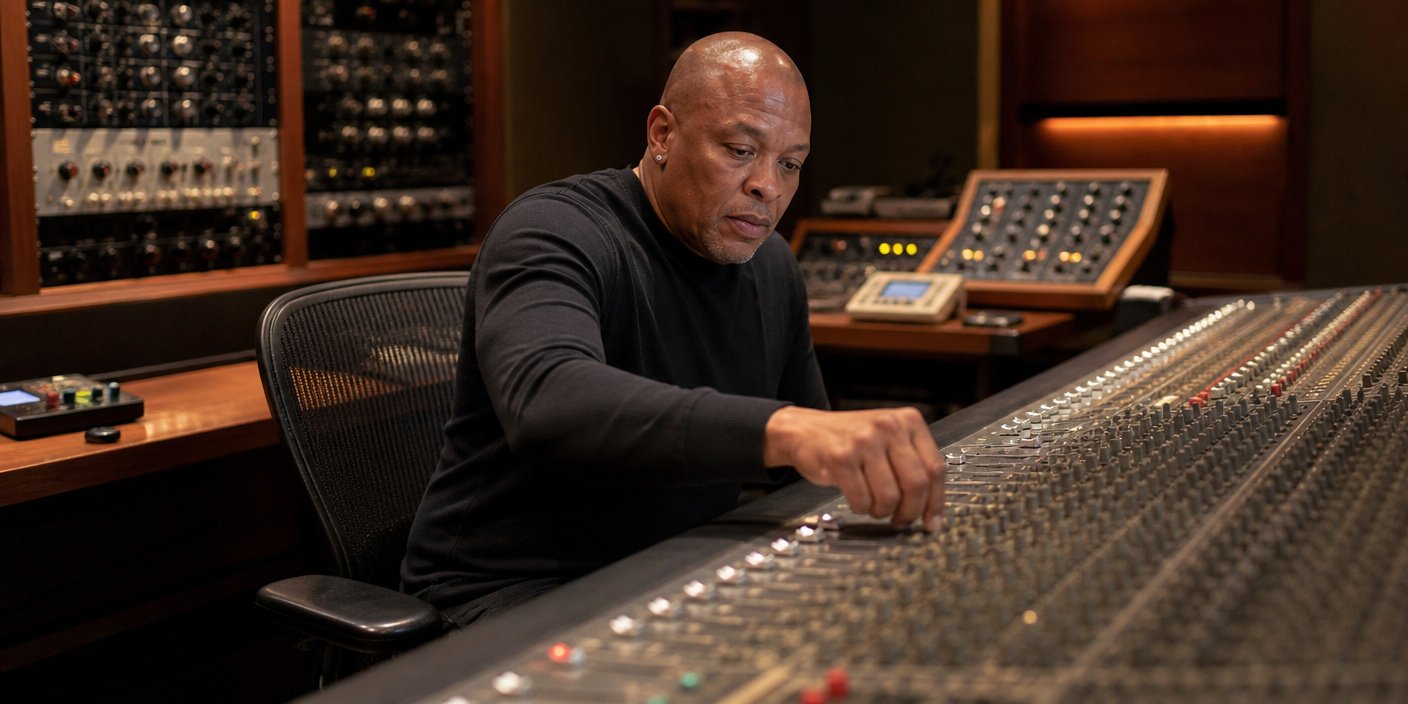
In a candid discussion that has rippled through the music industry, hip-hop icon and legendary producer Dr. Dre has addressed the growing anxiety surrounding artificial intelligence in music. As AI tools increasingly infiltrate the creative process, from algorithmic beat-making to vocal synthesis, the music community has been deeply divided. However, for one of the most successful producers in modern music history, the conversation is far simpler: AI is not a threat to music; it is merely a test of creative competence.
The Perspective from the Board
Dr. Dre, whose influence on hip-hop production spans decades of technological evolution, offered his unfiltered thoughts during a recent interview with Entertainment Tonight. Addressing the widespread fear that generative AI could replace human musicians, Dre was dismissive of the panic, noting that “people who have trouble creating” are the ones most likely to view the technology as a danger to their livelihoods.
This statement strikes at the heart of the debate. For Dre, whose career is defined by obsessive perfectionism and hands-on control, the creative act is fundamentally human. He suggests that those who rely on AI to do the “heavy lifting” or provide the “soul” of a track are the ones who lack the intrinsic ability to synthesize sound, emotion, and rhythm on their own. By framing AI as a tool for those who already know how to create, rather than a replacement for talent, Dre positions himself alongside innovators who view technological advancement as a force multiplier for, rather than a replacement of, artistic intent.
The Evolution of AI in Music Production
To understand Dr. Dre’s stance, one must look at the historical context of music production technology. Throughout his career, Dre has been a pioneer in adopting new tools. From the early days of the E-mu SP-1200 and the Akai MPC60—machines that, at the time, were also criticized for making production “too easy” or “less authentic” by traditional instrumentalists—to the digital audio workstations (DAWs) that now dominate the studio environment, Dre has consistently utilized new technology to push the boundaries of sound.
The “Sampling” Parallel
In the 1980s and 90s, the hip-hop genre faced immense backlash from industry purists regarding the use of sampling. Critics argued that taking snippets of existing music was not “true” musicianship. Yet, for producers like Dre, sampling was an art form—a way to curate and recontextualize history into something entirely new. AI is currently undergoing a similar scrutiny. It is viewed as an “easy button” by some, but for established producers, it represents a new palette of textures and possibilities. The distinction, as Dre implies, is in the curation. A computer can generate a melody, but a human must choose, refine, and arrange that melody to elicit a visceral response.
Secondary Angles: The Human Touch
1. AI as a Force Multiplier: Beyond the headlines, professional producers are leveraging machine learning to automate tedious tasks—such as stem separation, frequency masking, and rhythm quantization—allowing them to focus on the high-level arrangement and sonic texture.
2. The Democratization of Production: While some fear the loss of industry “gatekeepers,” AI potentially lowers the barrier to entry for millions of aspiring artists, creating a more diverse, if more competitive, musical landscape.
3. The Intellectual Property Frontier: The real threat of AI, which Dre does not explicitly endorse, lies in the legal landscape of copyright and training data. The challenge is not in the creation of music, but in the unauthorized use of an artist’s signature “sound” and voice, which remains the primary legislative battleground.
Why Perfectionists Don’t Fear Algorithms
Dre’s reputation as a perfectionist is legendary. His work on albums like The Chronic and 2001 involved months of layering and re-layering sounds until they met his exacting standards. This philosophy of deep, iterative work is the antithesis of the “prompt-and-produce” model associated with basic AI generators. When Dre says AI is not a threat, he is speaking from the position of someone who creates from a place of absolute vision. For a visionary, a tool is just a tool—whether it’s a Moog synthesizer, an MPC, or a generative neural network. The technology cannot replicate the emotional journey or the specific “ear” that defines a producer’s catalog.
This stance echoes the sentiments of many industry veterans who see the current wave of AI tools as inevitable. The “trouble creating” sentiment is a direct critique of the “lazy producer” archetype—those who look for shortcuts rather than using technology to accelerate their own unique workflow. As the industry moves forward, the divide may widen not between “human vs. AI,” but between those who use AI as a brush and those who hope the computer will paint the entire picture for them.
FAQ: People Also Ask
Q: Did Dr. Dre say AI will replace human producers?
A: No. In fact, he expressed the opposite. He argued that AI is not a threat to music and suggested that the fear of AI is limited to those who have personal difficulty in the creative process.
Q: What specific technology is Dr. Dre referring to?
A: While he did not name a specific software, he is referencing the broader wave of generative AI tools that can compose melodies, write lyrics, and produce beats, which have become a major talking point in the music industry during 2023 and 2024.
Q: Why is Dr. Dre’s opinion significant in the AI debate?
A: As one of the most successful and technically skilled producers in hip-hop history, Dr. Dre’s endorsement (or dismissal of concern) regarding new production technology carries immense weight. His career has been built on adopting new tech to redefine sound.
Q: Does Dr. Dre use AI in his own music production?
A: Dre noted that he utilizes artificial intelligence as a creative tool, reinforcing the idea that for a skilled creator, technology is a resource rather than a replacement.