The collective known as caulbearers has returned to the auditory landscape with their latest project, ‘Come Back Home,’ a sweeping album that navigates the intersection of hip-hop, jazz, and soul with surgical precision. By layering complex rhythmic patterns against the warmth of organic instrumentation, the group avoids the trap of genre-stagnation, offering instead a deeply textured meditation on what it means to belong in a globalized, often fragmented, world. The album stands not just as a collection of songs, but as a narrative document of modern diaspora, demanding attention from both jazz purists and hip-hop heads.
Key Highlights
- Genre Synthesis: The album masterfully bridges the gap between boom-bap percussion, improvisational jazz phrasing, and classic soul-inspired vocal arrangements.
- Thematic Depth: Central to the work is the concept of ‘home’—not merely as a geographical location, but as a shifting construct of memory, culture, and social connectivity.
- Collective Craft: The production emphasizes the ‘collective’ ethos, showcasing how collaborative creative environments produce more intricate, layered, and diverse soundscapes than solo efforts.
The Architecture of Sound and Identity in ‘Come Back Home’
The most striking aspect of the caulbearers’ latest release is the intentionality behind the sound design. In an era where music is often optimized for 15-second social media clips, ‘Come Back Home’ feels defiant in its length, patience, and arrangement. The production utilizes a ‘maximalist-minimalism’ approach: while the tracks are layered with field recordings, brass stabs, and intricate synth pads, the space between the notes is treated as an instrument itself.
Weaving Genres: The Hip-Hop and Jazz Nexus
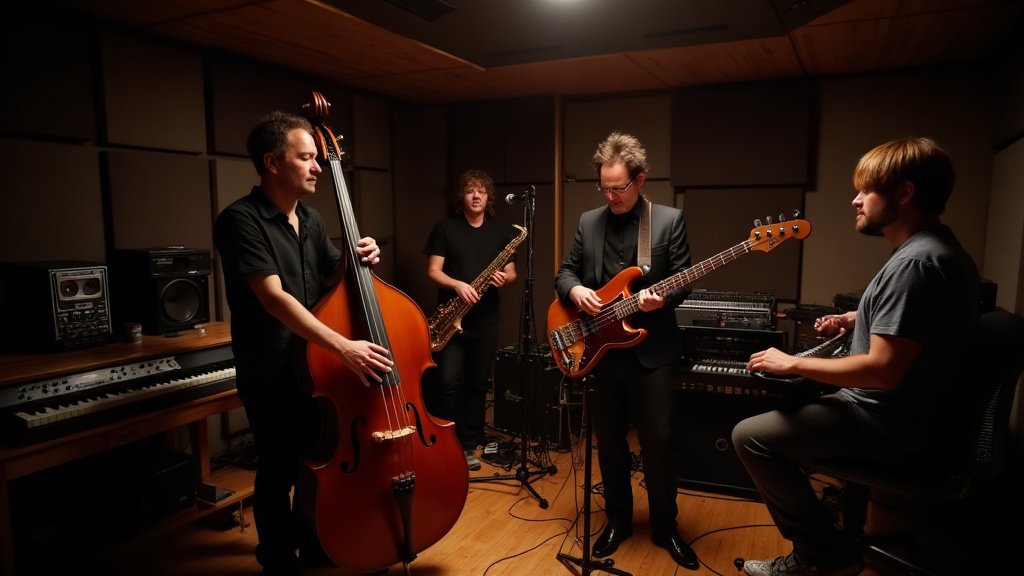
At the core of the album lies the synergy between hip-hop and jazz—a relationship that has defined the most introspective eras of music history. The caulbearers engage with this history but refuse to let it become a tribute act. By incorporating live-recorded saxophone and upright bass motifs that interact with programmed breakbeats, the album creates a ‘living’ sound. This is particularly evident in the bridge tracks, where the rhythm section loosens its grip, allowing the melody to drift into experimental territory. This fusion is not merely aesthetic; it serves the album’s thematic goals. The erratic, improvisational nature of the jazz elements mirrors the uncertainty of the human experience, while the grounded, steady hip-hop beats provide the necessary anchor, representing the search for stability.
Lyrical Cartography: Navigating the Concept of ‘Home’
Lyrically, the album functions as a map of the internal and external self. The collective explores the displacement that characterizes 21st-century life, touching upon the nuances of migration, community, and the loss of cultural touchstones. Rather than adopting a singular, didactic voice, the project employs a chorus of perspectives. This multivocal approach allows the album to tackle the theme of ‘home’ from multiple angles: home as a sanctuary, home as a cage, and home as a memory that evolves as the subject changes. The lyricism is dense, requiring multiple listens to fully parse the references to urban landscapes and the socio-political realities of minority experiences within metropolitan centers.
The Collective Ethos vs. The Streaming Economy
One of the most compelling aspects of this project is the model of its creation. The caulbearers operate as a collective, a structure that inherently challenges the modern music industry’s focus on the ‘star persona.’ By diffusing authorship across several contributors, the music feels less like a product designed for a singular brand and more like a cultural artifact. This approach offers a secondary angle of analysis: the survival of independent, ensemble-driven music in a market dominated by algorithm-friendly individual artists. The success of ‘Come Back Home’ suggests that listeners are increasingly craving depth and authenticity, even at the cost of commercial ‘listenability.’
Exploring the Diaspora of Sound
Looking beyond the technical execution, the album forces a conversation about the ‘Diaspora of Sound.’ Just as people move, so too does music. The caulbearers effectively trace how soul, funk, and jazz traditions have migrated across borders, becoming hybridized in the process. They treat these genres as living legacies rather than museum pieces. This creates a third secondary angle: the future of sonic preservation. How does a generation raised on the internet preserve the soul of their predecessors? The answer found here is through synthesis—taking the old, deconstructing it, and layering it with the anxiety and energy of the current moment.
FAQ: People Also Ask
Q: What genre does caulbearers fall into?
A: The caulbearers are best described as a fusion collective. Their music sits at the intersection of hip-hop, jazz, and soul, though they frequently incorporate elements of experimental electronic music and spoken word to expand their reach.
Q: What is the primary theme of the album ‘Come Back Home’?
A: The central theme is the concept of ‘home.’ The album explores this through the lenses of cultural identity, migration, displacement, and the emotional connection to place, treating home as both a physical location and an evolving internal construct.
Q: Is this album a good entry point for new listeners?
A: Yes, the album is highly accessible due to its melodic sensibilities and high production value. It offers enough complexity to satisfy seasoned jazz and hip-hop listeners while remaining engaging for those who appreciate soulful, rhythm-driven music.