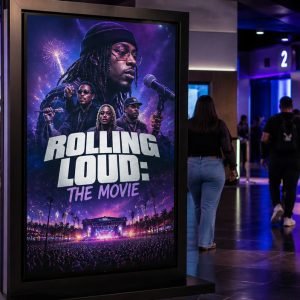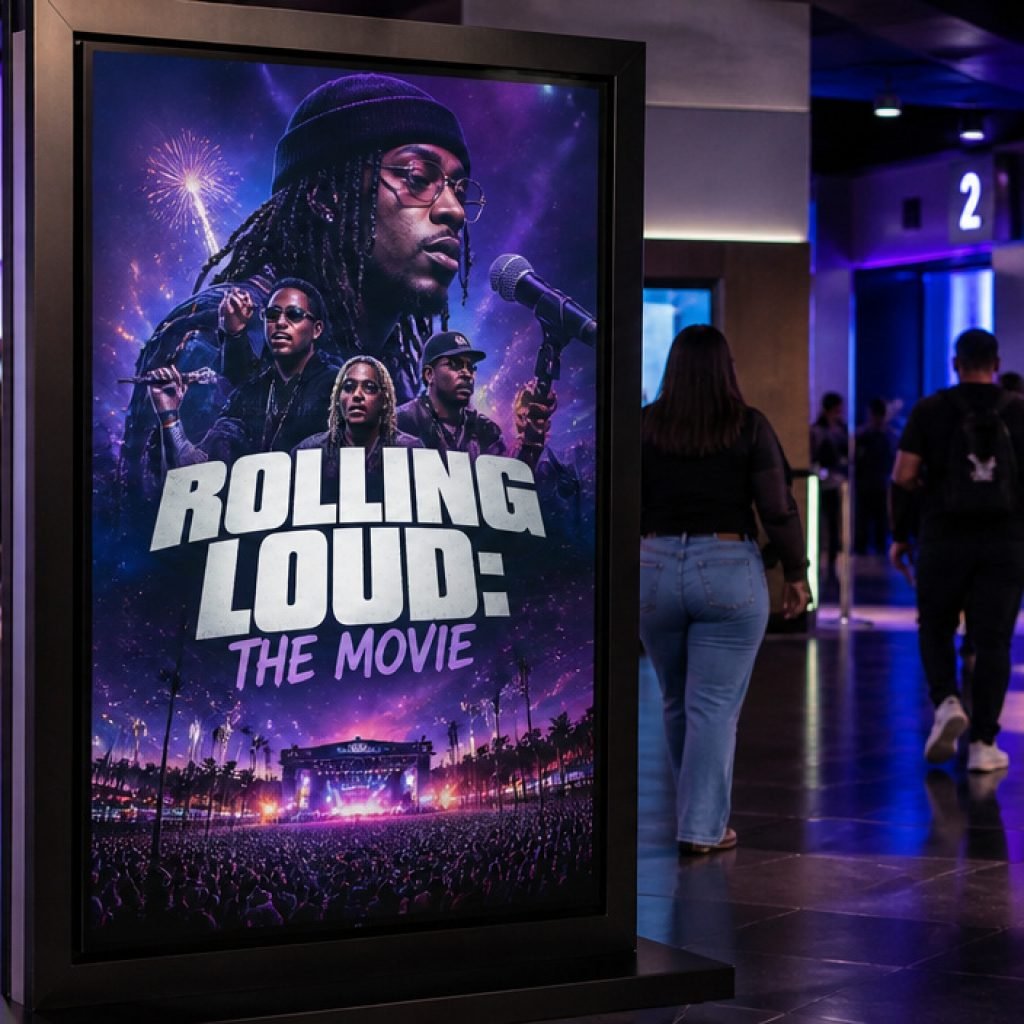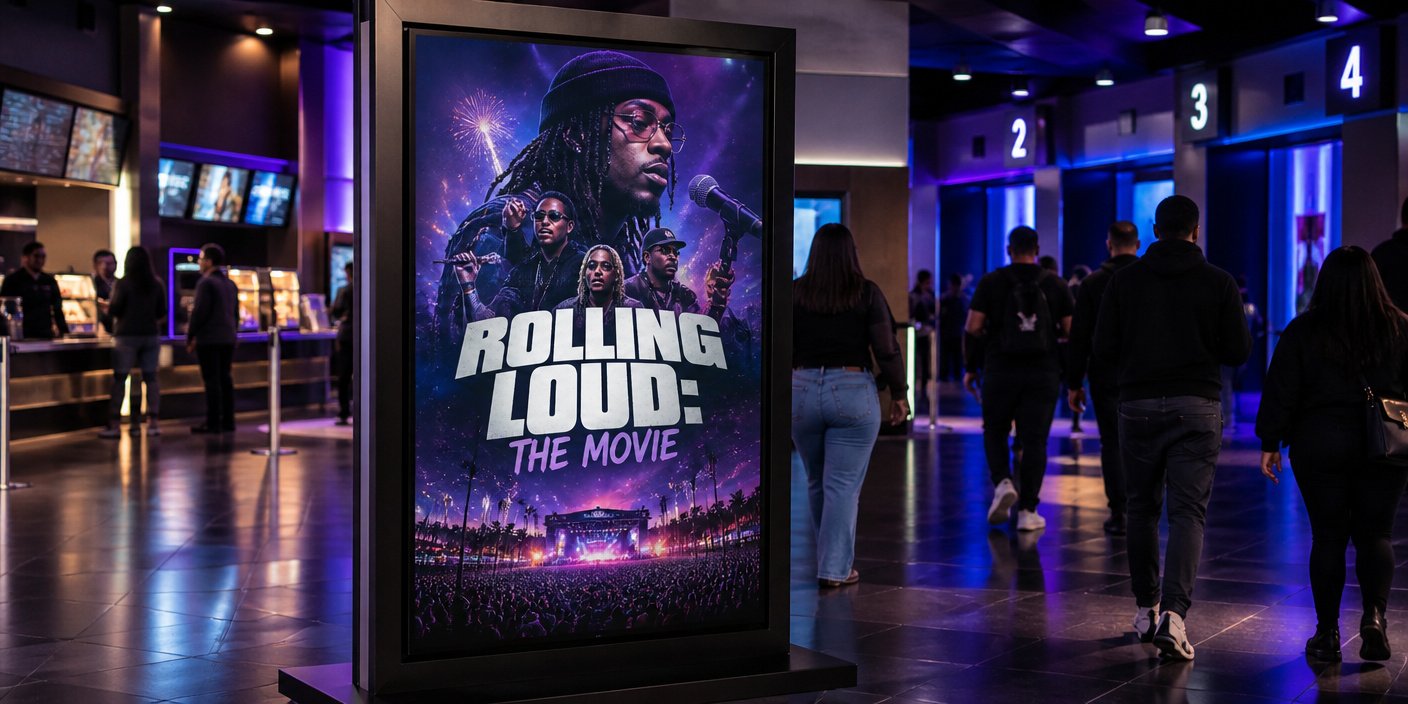
Rolling Loud has officially transcended the festival grounds to claim its place in cinematic history. As of October 2, 2026, ‘Rolling Loud: The Movie’ has arrived in theaters nationwide, offering an unprecedented look at the chaotic, high-energy world of the planet’s largest hip-hop festival. By blending narrative storytelling with concert-film aesthetics, the production bridges the gap between festival culture and mainstream Hollywood, anchored by an unexpected performance from veteran actor Owen Wilson and explosive appearances by industry titans like Travis Scott and Sexyy Red.
Key Highlights
- Release Date: The film officially premiered in theaters nationwide on October 2, 2026.
- Star Power: The project stars Owen Wilson in a central narrative role, with featured appearances by hip-hop heavyweights Travis Scott and Sexyy Red.
- Concept: ‘Rolling Loud: The Movie’ captures the raw, kinetic energy of the festival experience, transitioning from behind-the-scenes drama to the intensity of main-stage performances.
- Accessibility: Tickets for theatrical screenings are available through major cinema chains, with digital streaming and VOD releases expected in the following quarter.
The Evolution of the Festival Experience
The Rolling Loud festival brand has long functioned as more than just a series of concerts; it is a cultural barometer for the current state of hip-hop. Since its inception in Miami in 2015, the festival has grown into a global juggernaut, shaping trends, breaking new artists, and defining the aesthetic of modern rap performance. With the release of ‘Rolling Loud: The Movie,’ the organization is signaling a shift from live-event production to multi-platform content creation.
This transition is not unique in the industry—concert films have historically served as the definitive documentation of musical eras, from ‘Woodstock’ (1970) to ‘Homecoming’ (2019)—but ‘Rolling Loud: The Movie’ takes a distinct approach. Rather than acting as a static recording, the film employs a hybrid narrative structure. It attempts to weave a cohesive story through the inherent bedlam of festival life, providing a roadmap of the adrenaline-fueled environment that fans have come to associate with the Rolling Loud name.
The Casting of Owen Wilson: A Strategic Pivot
Perhaps the most discussed element of the production is the casting of Owen Wilson. Known primarily for his roles in high-budget comedies and auteur-driven dramas, Wilson’s presence in a film about the ultra-intense hip-hop scene is, at first glance, unconventional. However, from a creative standpoint, this choice acts as a vital narrative anchor.
Wilson’s screen presence is inherently observational and often grounded in a sense of bemused detachment. By placing this character type within the volatile, sensory-overload environment of Rolling Loud, the film utilizes his presence to ground the audience. He serves as a surrogate for the viewer, navigating the labyrinthine infrastructure of the festival, from the frenetic backstage areas to the crushing weight of the mosh pits. This narrative device allows the film to explore the human element of the festival—the exhaustion, the ambition, and the sheer scale of the operation—without getting lost in the noise of the performances alone.
The Role of Performance: Travis Scott and Sexyy Red
While the narrative serves as the vessel, the music remains the fuel. The film features high-fidelity captures of performances by Travis Scott and Sexyy Red, two artists who define the current vanguard of rap.
Travis Scott’s involvement is particularly significant. As an artist who has mastered the ‘live-performance-as-spectacle’ philosophy, his sequences in the film are designed to translate the sensory experience of a Rolling Loud performance to a two-dimensional screen. The production team utilized specialized IMAX-capable cameras and immersive sound design to ensure that the bass and the crowd’s roar are felt, rather than just heard.
Sexyy Red’s inclusion highlights the film’s commitment to capturing the current zeitgeist. Her performance segments serve as a rhythmic counterpoint to the larger, more stadium-filling sets, showcasing the grit and unfiltered charisma that have propelled her to the top of the charts. Together, these performances act as the heartbeat of the film, providing the necessary adrenaline that justifies the feature-length runtime.
Technical Production and Cinematic Immersion
Directing the chaos of a festival like Rolling Loud requires a meticulous approach to cinematography. The production team faced the challenge of filming in environments that are, by design, unpredictable. Lighting shifts rapidly, crowds move in waves, and the pyrotechnics create visual noise that can easily wash out a camera lens.
To overcome these hurdles, the crew employed a documentary-style ‘run-and-gun’ methodology, utilizing mobile, high-speed rigs that could navigate the festival floor alongside the performers. This creates a visceral, immersive aesthetic that moves away from the polished, tripod-based cinematography typical of many concert films. Instead, the audience feels as though they are standing in the front row, jostled by the crowd and blinded by the stage lights.
The Future of Festival-Driven Media
‘Rolling Loud: The Movie’ sets a precedent for how music festivals may leverage their intellectual property in the future. As streaming platforms and theaters demand more ‘event’ content, festivals with the brand equity of Rolling Loud are perfectly positioned to act as studios. This film likely serves as a pilot for more narrative-driven projects. If the box office performance mirrors the attendance numbers of the physical festival, we can expect a new wave of ‘festival-verse’ content, where the story of the concert becomes as significant as the music itself.
FAQ: People Also Ask
1. Is ‘Rolling Loud: The Movie’ currently available on streaming services?
As of the October 2, 2026, theatrical release, the film is primarily available in cinemas. Streaming availability on platforms like Netflix, Hulu, or specialized music platforms is expected to follow in the upcoming months, following the standard theatrical window.
2. Is Owen Wilson playing himself in the film?
While the film utilizes his recognizable persona, the nature of his role acts as a narrative character who guides the viewer through the festival’s subculture, rather than a direct biographical depiction of the actor himself.
3. Will there be more movies from the Rolling Loud team?
While no official sequel has been confirmed, the production signifies a major expansion into media for the Rolling Loud brand. The success of this project will likely determine the volume and frequency of future narrative films from the organization.
4. Is the film suitable for all ages?
Given the intensity of the festival environment, the language, and the content of the musical performances, the film is expected to carry a mature rating (likely R). Prospective viewers are encouraged to check their local theater listings for specific age restrictions.